A major conservation project at the Theodosian Palace marks a new phase in preserving one of the Balkans’ most significant Late Antique sites.
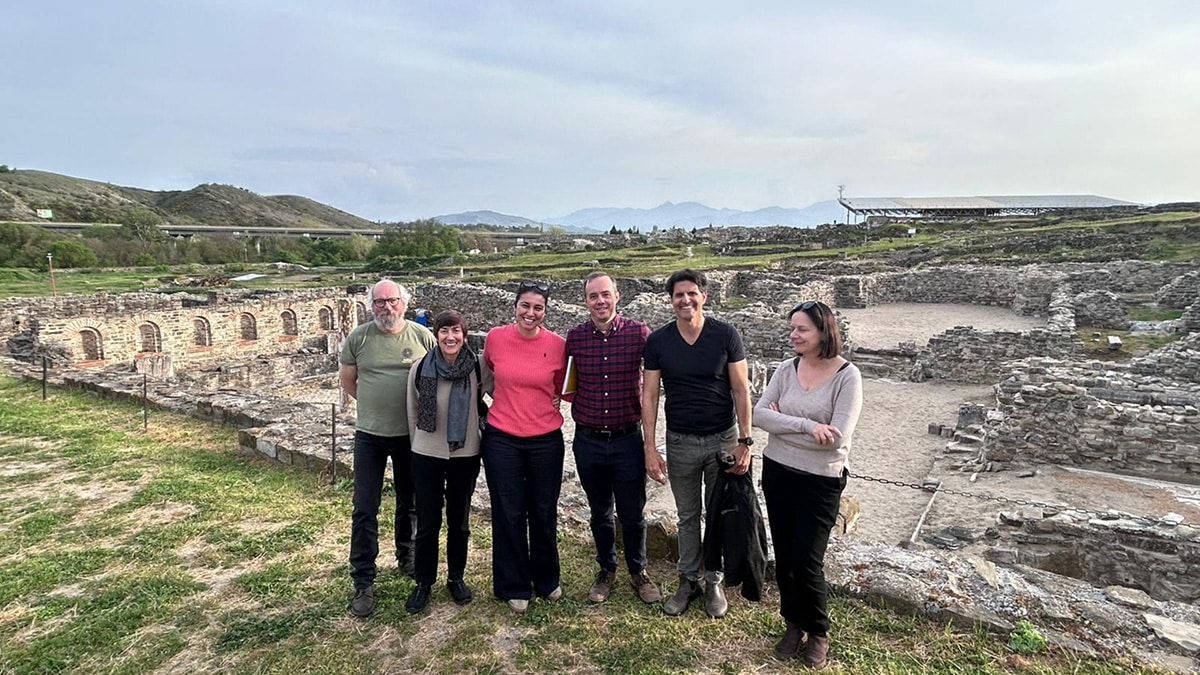
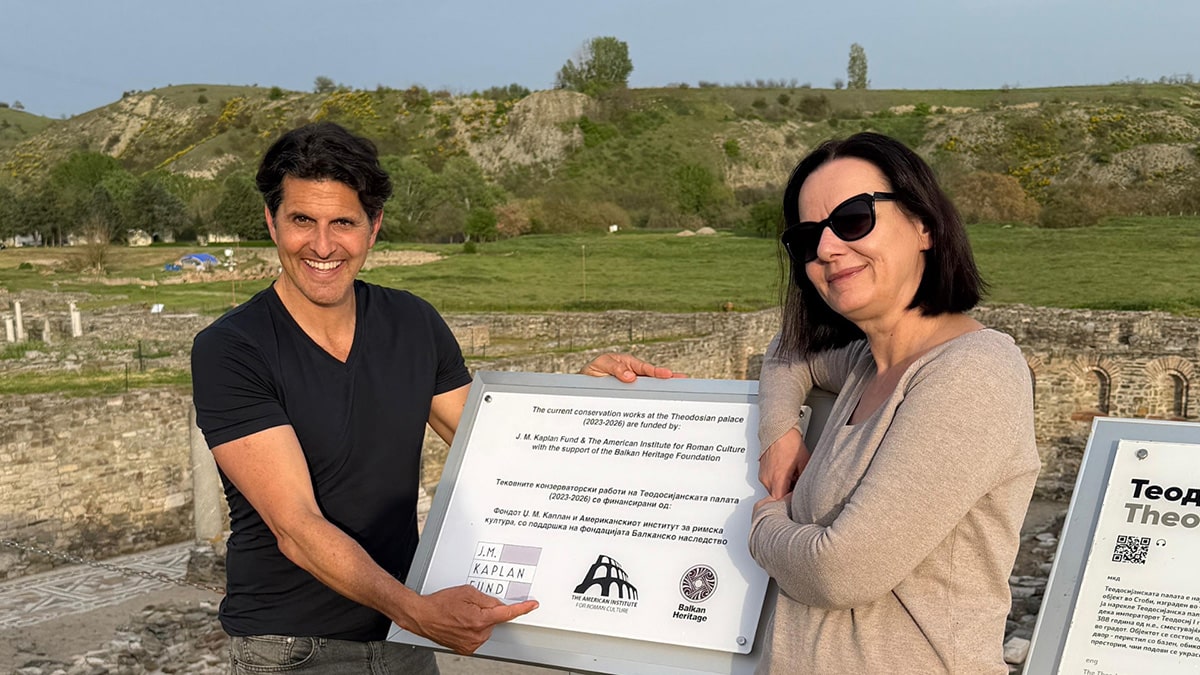
A major conservation effort is underway at the Theodosian Palace in Stobi, where ARL Director Darius Arya traveled in April 2026 to document the ECL award project. The initiative represents the first major implementation of a Master Conservation Plan developed between 2019 and 2021 by the National Institution Stobi and the Balkan Heritage Foundation, with funding from the J.M. Kaplan Fund.

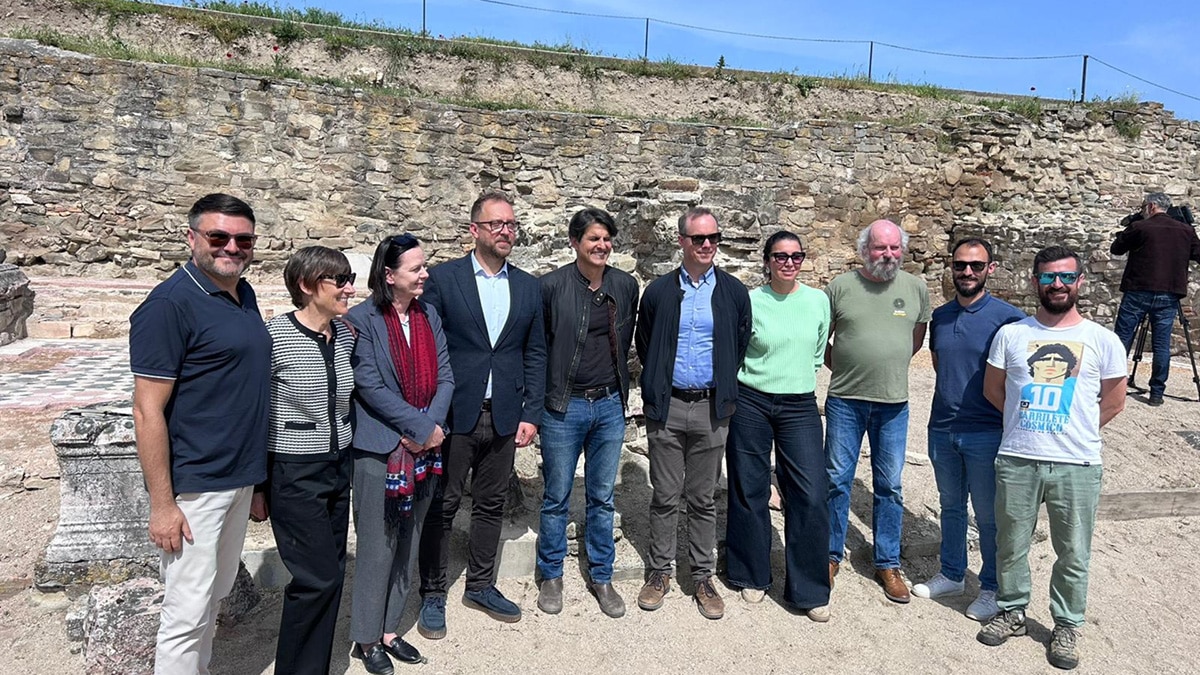
On site, Arya met with Ivan Vasilev, Founder, Chairman of the Board of Directors and CEO of the Balkan Heritage Foundation, and Dr. Silvana Blazhevska, Director of the National Institution Stobi. He was joined by Jeanne Marie Teutonico, an independent consultant in architectural conservation and ECL grant advisory board member, and also met with North Macedonia’s Minister of Culture and Tourism Zoran Ljukov and Will Raynolds, Program Director of the J.M. Kaplan Fund.
“Stobi captures a moment when the Roman world is transforming, and this palace sits at the center of that shift—from imperial presence to regional identity,” Arya says. “This is exactly the kind of project we want to support—where conservation, research, and storytelling come together to bring a site like Stobi into the global conversation.”

Inside a Late Roman Palace
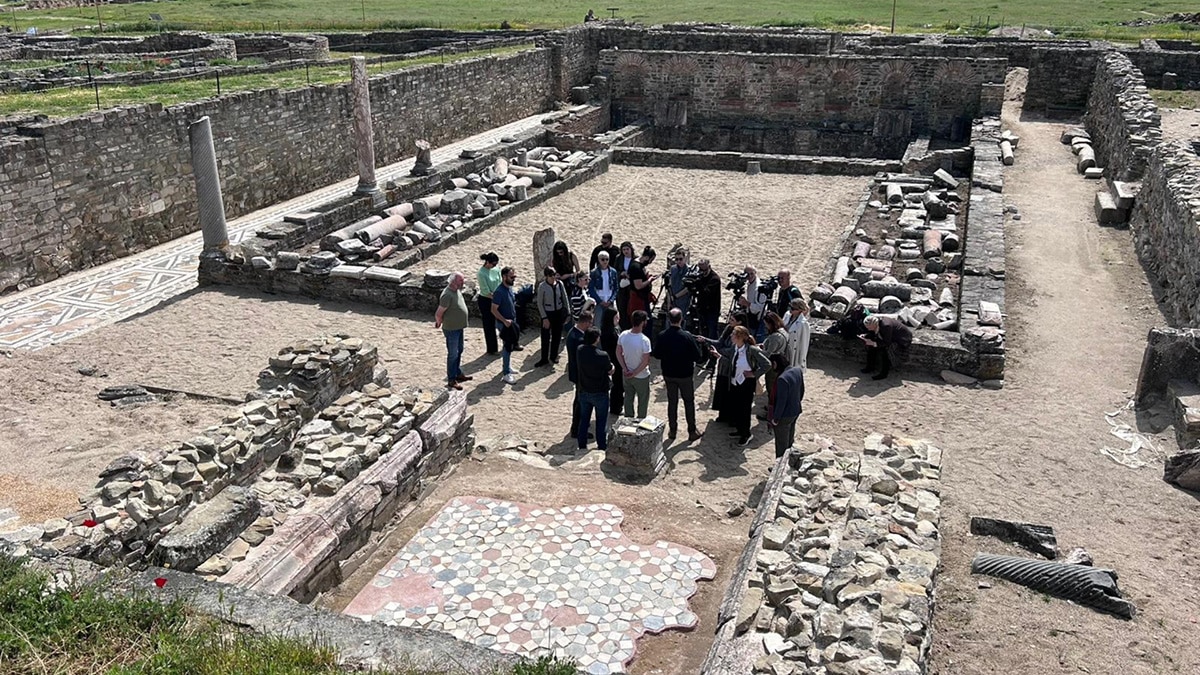
Located on a middle terrace, the Theodosian Palace is among the largest Late Antique residential complexes at Stobi. Built in the late 4th century and rebuilt in the 5th, it remained in use until the early 7th century.
Dr. Silvana Blazhevska, Director of the National Institution Stobi, describes the site as offering “exceptional insight into the history, architecture, artistic production, and daily life of Late Antique Stobi,” reflecting both its scale and the richness of its decorative program.
Organized around a spacious peristyle courtyard with a prominent nymphaeum, the residence includes eleven rooms, including a large triclinium and apsidal chambers. Floors in opus tessellatum, opus segmentatum, and opus sectile underscore its high-status character and its position between eastern and western traditions of the Roman and early Byzantine world.
Arya noted the unusually high level of preservation and presentation at the site, describing it as “a standout excavation… well maintained and aesthetically coherent,” where interventions remain legible but “with a very soft impact.”

Why Stobi, Why Now
Its significance extends beyond architecture. Sculptural finds from earlier excavations—including marble statues of Sarapis, Artemis, Dionysus, and Cybele, along with finely crafted bronze figures—point to a sophisticated cultural environment and long-distance artistic connections.
Perhaps the most striking recent discovery came in 2023, when archaeologists uncovered a mosaic depicting Dionysus in a room south of the peristyle, adding a new dimension to the residence’s symbolic program and its expression of elite identity in Late Antiquity.
“Though the Dionysus mosaic isn’t part of the current phase, it may come later,” Arya explains, noting that the project is focusing first on the most structurally and visually central elements of the complex.

Conservation at a Critical Moment
Though first excavated in the 1930s, the Theodosian Palace has only been partially conserved, leaving many architectural elements and mosaic surfaces exposed and vulnerable to environmental damage.
For Vasilev, the ECL grant came “at the right moment,” enabling the international team to stabilize seriously endangered walls and mosaics using current conservation standards. He calls it “an excellent example of synergy,” underscoring how coordinated funding and expertise can advance the project at a decisive stage.
The additional support has also made it possible to move toward the final phase of conservation.
More broadly, the project reflects a collaborative model bringing together local institutions and international partners. The National Institution Stobi works closely with the Balkan Heritage Foundation, with continued backing from the Ministry of Culture and Tourism of North Macedonia, which identifies Stobi as a key site for both research and cultural tourism.
The next phase will focus on improving access alongside preservation. While the palace is currently open within the archaeological park, visitors are limited to exterior views, with plans underway to introduce internal access routes and a dedicated visitor area—part of a broader effort, as Blazhevska explains, to expand access while safeguarding the site’s most fragile elements, including the newly discovered Dionysus mosaic.

Rethinking the Roman World
The Theodosian Palace offers a window into a period of transformation across the Roman world, reflecting shifts in political authority, regional identity, and elite domestic life in Late Antiquity. Its scale, layout, and decorative program point to a moment when imperial traditions were being adapted to new local realities, particularly in regions like the Balkans that sat at the crossroads of cultural and economic exchange.
“What stands out immediately is the quality of the site—the level of excavation, the presentation, the care. It’s a rare case where you’re not just seeing fragments, but a space that still reads clearly as a Roman residence,” Arya says.
As conservation work advances, the Theodosian Palace is emerging as a key site for understanding the Balkan region during the later Roman Empire and the broader transformations that reshaped the final centuries of the Roman world.
“This is exactly the kind of site we look for—places with strong local leadership, real commitment to preservation, and the potential to bring a site like Stobi into the global conversation,” Arya adds.