
Roman Emperor · 218–222 CE · Severan dynasty
Official nameImperator Caesar Marcus Aurelius Antoninus Augustus
Born Varius Avitus Bassianus
Born203 or 204 CE, most likely Emesa (modern Homs, Syria)
(Herodian 5.3.2–4; Cassius Dio, Roman History, 79.31; Historia Augusta, Life of Elagabalus, 1)
ReignMay 16, 218 – March 11, 222 CE
(Herodian 5.3.12, 5.4.6)
Predecessor / SuccessorMacrinus / Severus Alexander
ParentsSextus Varius Marcellus and Julia Soaemias
MarriagesJulia Cornelia Paula (219–220), Aquilia Severa (220–221, 221–222), Annia Aurelia Faustina (221); also Hierocles and Aurelius Zoticus
(Herodian 5.6.1–2; Cassius Dio, Roman History, 80.15; Historia Augusta, Life of Elagabalus, 10)
DeathMarch 11, 222 CE, Rome. Killed by the Praetorian Guard with his mother, Julia Soaemias; his body was thrown into the Tiber.
(Herodian 5.8.8–9; Cassius Dio, Roman History, 80.20)
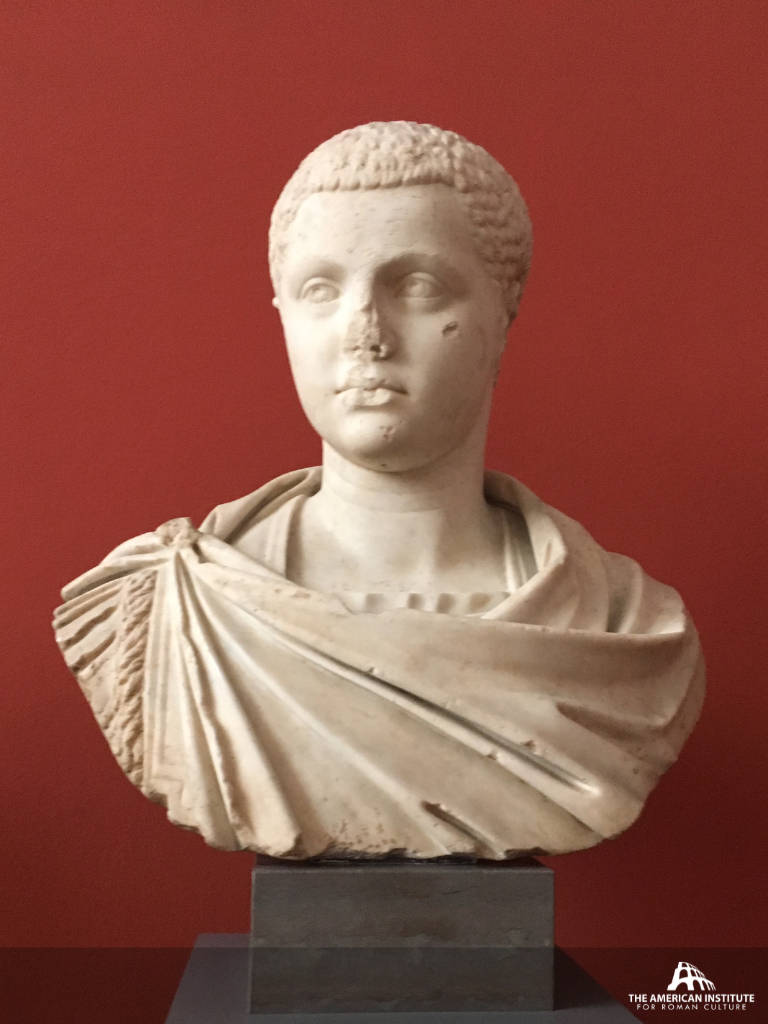
Bust of Elagabalus, Ny Carlsberg Glyptotek, Copenhagen
Born around 203 or 204 CE in Emesa, Syria, Varius Avitus Bassianus was raised to serve as hereditary high priest of the city’s powerful sun god, Elagabal. Within a few years, however, the young priest would become the Roman emperor Elagabalus. His reign lasted barely four years, but it challenged Roman religious traditions, offended powerful political interests, and left behind one of the most controversial reputations in Roman history.
Elagabalus was the son of Sextus Varius Marcellus and Julia Soaemias, a member of the powerful Severan family. His grandmother, Julia Maesa, was the sister of the former empress Julia Domna and had considerable connections within the imperial court. After the assassination of Emperor Caracalla in 217 CE, Macrinus seized the throne. Julia Maesa and her family soon began promoting the claim that her grandson was Caracalla’s illegitimate son. The story gave the young priest a powerful claim to the Severan succession.
In 218 CE, soldiers of the Legio III Gallica rebelled against Macrinus and proclaimed the fourteen-year-old Bassianus emperor. Macrinus marched against the rebels but was defeated, and Elagabalus’s position was subsequently confirmed. The boy who had spent his childhood serving a Syrian deity was now the ruler of the Roman Empire.
The Priest-Emperor
Elagabalus arrived in Rome in 219 CE, bringing with him the religious traditions of his native Emesa. At the center of his worship was a sacred black stone believed to represent the god Elagabal. The stone was brought to Rome and installed in a new temple on the Palatine Hill, the Elagabalium.
Elagabalus did not simply add his native god to Rome’s already crowded pantheon. He gave Elagabal a position of supremacy over the traditional Roman gods, including Jupiter. The deity was officially presented as Sol Invictus Elagabalus, or “Invincible Sun Elagabalus.” The emperor himself served as the god’s high priest and took an active role in elaborate religious ceremonies.
This religious policy was deeply unsettling to many Roman elites. Roman religion was closely tied to the traditions of the state, and the emperor’s decision to give a foreign deity such prominence challenged established expectations about how an emperor should behave.
Elagabalus caused an even greater scandal when he married Aquilia Severa, a Vestal Virgin. Vestals were priestesses bound by vows of chastity, making the marriage a direct violation of one of Rome’s most important religious traditions. Elagabalus presented the union as a sacred marriage between a priest and priestess, but the decision provoked considerable opposition.
An Emperor Who Defied Convention
Elagabalus’s religious policies were only part of the controversy surrounding his reign. Ancient historians also describe behavior that challenged Roman expectations about gender, sexuality, and social hierarchy.
Cassius Dio and other ancient writers portray Elagabalus wearing feminine clothing, adopting feminine mannerisms, and expressing a desire to be addressed as a woman. Dio also claims that he wished to undergo a sex change. These accounts should be treated cautiously, however, as the surviving sources were deeply hostile to Elagabalus and often used sex and gender to portray emperors as unfit to rule.
His political appointments also became a source of criticism. Ancient accounts accuse Elagabalus of elevating actors, charioteers, freedmen, and other men of relatively low social standing to important positions.
As opposition grew, Elagabalus’s grandmother Julia Maesa sought a way to protect the Severan dynasty. In 221 CE, Elagabalus adopted his younger cousin, Alexander Severus, as caesar and heir. Alexander was the son of Julia Maesa’s younger daughter, Julia Mamaea, and was increasingly presented as a possible successor.
The arrangement did not last. Elagabalus soon became suspicious of Alexander’s growing popularity and attempted to remove him from public life. When the Praetorian Guard rallied around Alexander, the emperor’s position became increasingly precarious.
The Fall of Elagabalus
In March 222 CE, the conflict between Elagabalus and Alexander reached its breaking point. The Praetorian Guard refused to abandon Alexander, and Elagabalus’s attempts to punish those who supported his cousin only intensified the crisis.
On March 11, 222 CE, soldiers loyal to Alexander killed Elagabalus and his mother, Julia Soaemias. Elagabalus was only about 18 years old. The soldiers then dragged the bodies through the streets of Rome before throwing them into a sewer that flowed into the Tiber. The Senate subsequently condemned his memory, and his images and honors were removed or altered.
Bibliography
- Grant, Michael. The Severans: The Changed Roman Empire. Routledge, 1996.
- Icks, Martijn. The Crimes of Elagabalus: The Life and Legacy of Rome’s Decadent Boy Emperor. Harvard University Press, 2012.
- Rantala, Jussi. “Ruling in Purple … and Wearing Make-up: Gendered Adventures of Emperor Elagabalus as Seen by Cassius Dio and Herodian.” In Exploring Gender Diversity in the Ancient World, edited by Allison Surtees and Jennifer Dyer, 118–128. Edinburgh University Press, 2020.
- Varner, Eric R. Mutilation and Transformation: Damnatio Memoriae and Roman Imperial Portraiture. Brill, 2004.
c. 204 CE
Born at Emesa, Syria, in 203 or 204 CE.
(Herodian 5.3.3)
218 CE
Proclaimed emperor by the Legio III Gallica; defeats Macrinus near Antioch on June 8.
(Herodian 5.3.12, 5.4.6)
219 CE
Arrives in Rome with the sacred black stone of Elagabal, raised above Jupiter as chief deity.
(Herodian 5.3.4–6, 5.5.7; Historia Augusta, Life of Elagabalus, 6)
220 CE
Marries the Vestal Virgin Aquilia Severa, a grave breach of Roman religious law.
(Historia Augusta, Life of Elagabalus, 6; Herodian 5.6.2)
221 CE
Adopts his cousin Alexander Severus as caesar and heir.
(Herodian 5.7.1–4)
222 CE
Killed with his mother on March 11; the Senate condemns his memory.
(Herodian 5.8.8–9; Historia Augusta, Life of Elagabalus, 17)

This content is brought to you by The American Institute for Roman Culture, a 501(C)3 US Non-Profit Organization.
Please support our mission to aid learning and understanding of ancient Rome through free-to-access content by donating today.
Join our free newsletter to receive more ancient Rome content, lecture and Masterclass invites, travel course news and more:
Cite this page as: Ancient Rome Live, The American Institute for Roman Culture, “Elagabalus“. Last modified
November 10, 2026. https://ancientromelive.org/elagabalus/
Created by The American Institute of Roman Culture, published on
August 11, 2023 under the following license: Creative Commons: Attribution-NonCommercial-ShareAlike. This license lets others remix, tweak, and build upon this content non-commercially, as long as they credit the author and license their new creations under the identical terms. Please note that content linked from this page may have different licensing terms.