Beneath the Bay of Naples, a landmark underwater excavation is recovering the infrastructure of Rome’s greatest commercial port — and the city that history left behind.

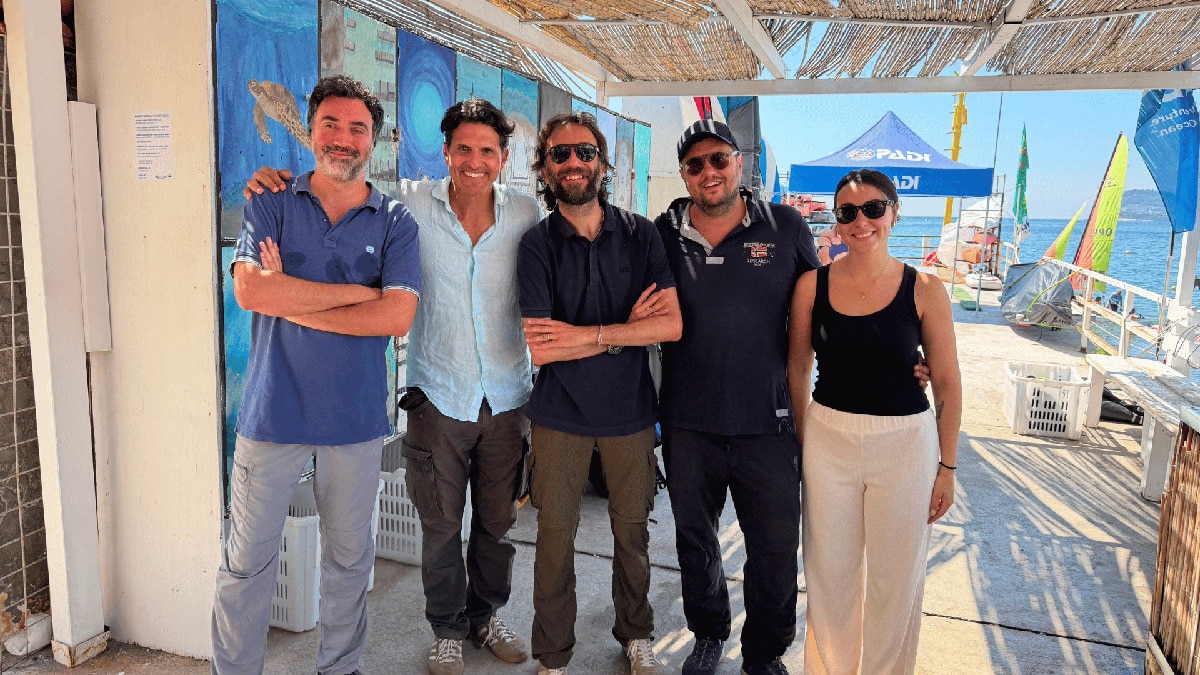
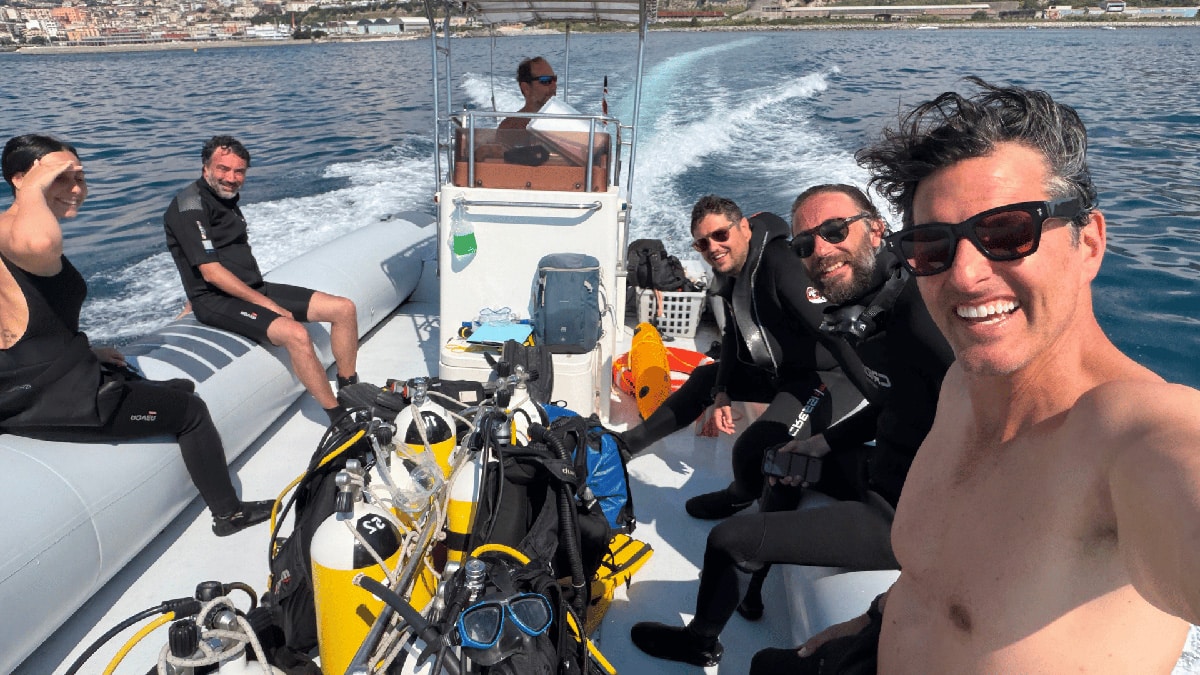
Three to five meters below the surface of the Bay of Naples, ARL Director Darius Arya was swimming through a Roman warehouse. Arya, a licensed scuba diver, spent the last week of June in Pozzuoli alongside Dr. Michele Stefanile, dropping beneath the bay for dives stretching nearly an hour: long enough to move through colonnaded porticoes, a workshop where ancient workers once cut marble blocks, and structural walls still holding wooden elements after two thousand years underwater.
Before Ostia, Rome’s lifeline to the wider world ran through Puteoli (modern Pozzuoli) on the Bay of Naples. It was the empire’s busiest commercial port, a major city whose harbour districts have been gradually swallowed by bradyseism, a volcanic ground movement unique to the Campi Flegrei that has been sinking the Bay of Pozzuoli’s coastline for centuries. Nearly two kilometres of ancient infrastructure now lies underwater.

A 2021–2027 research program led by Stefanile of the Istituto Italiano per l’Archeologia Marittima e delle Strutture Sommerse is systematically excavating what was lost. Funded through ARL’s Expandere Conscientiae Lumen (ECL) Grant, the project combines underwater ROV surveys, photogrammetry, 3D reconstruction, and GIS mapping across the submerged site.
A Temple Lost, Then Found Again
Among the project’s most significant finds is one that had spent decades in an odd limbo: documented but unreachable. The submerged Temple of the Nabateans – the only Nabatean temple ever identified outside the Nabatean homeland – was located in the 1980s but never properly excavated. Funding dried up. The temple slipped back beneath the surface of archaeological attention.
Stefanile had been tracking it for nearly twenty years. When the mapping project launched in 2021, relocating the temple was a primary objective. It was found on the first campaign and initial cleaning revealed it in surprisingly good condition, protected by Roman concrete poured over the site in the 2nd century AD following Trajan’s annexation of the Nabatean Kingdom.

How Rome Fed Itself
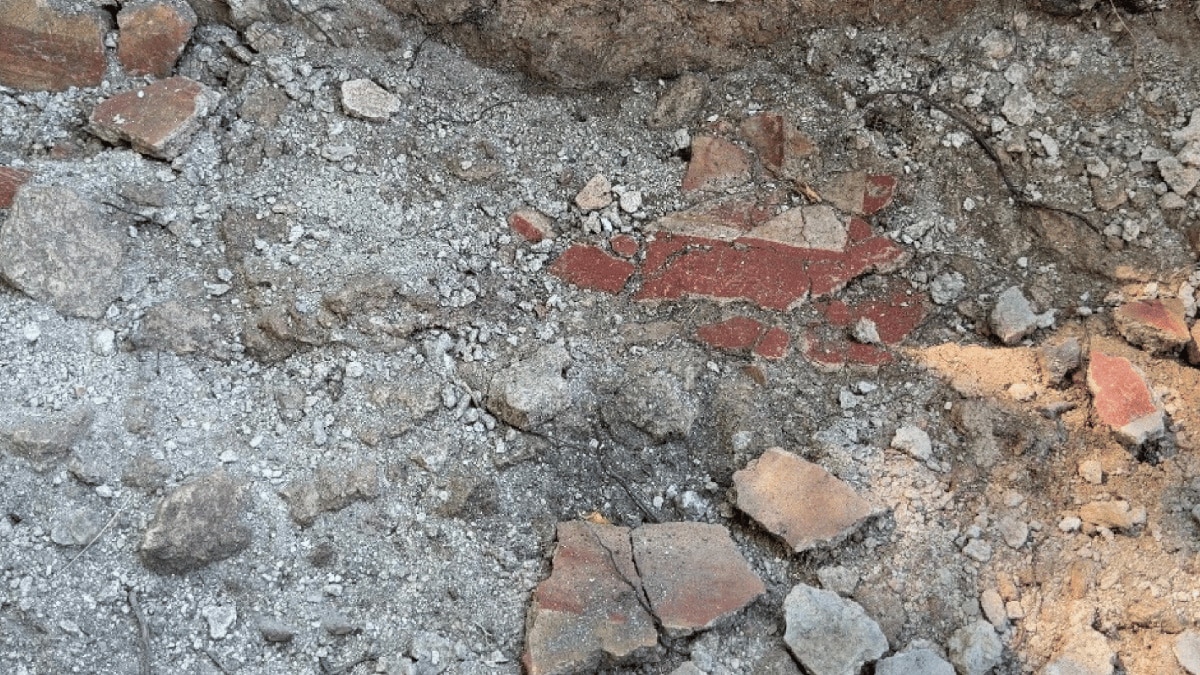
The granaries of the vicus Annianus may ultimately be the project’s most significant contribution. These submerged storage buildings are where Egyptian grain entered Rome’s distribution system. The evidence converges unusually well: ancient literary sources, the structures themselves, and the wax tablets of the Sulpicii (a Puteolan banking family whose documents were found near Pompeii) which record loans tied directly to grain storage at this site.
“This may be the only site in the world where we can observe the internal organization of a Roman granary in such detail,” Stefanile says, “thanks to the preservation of wood and furniture elements.”

Why Puteoli Has Been Overlooked
ARL Director Darius Arya, who helped bring this project into the ECL portfolio, frames what makes Puteoli’s obscurity so striking and so worth talking about.
“Puteoli deserves far more attention than it currently gets, because this was the port city of Rome and the empire – the great commercial hub before Portus was created at Ostia,” he says. “The tragedy is that so much of it has been lost to the sea, claimed gradually by bradyseism – the slow volcanic ground movement that has been swallowing the Bay of Pozzuoli’s coastline for centuries.”
But the city didn’t exist in isolation. “You have Misenum, the base of the imperial fleet. You have Baiae, Rome’s pleasure resort. And then Puteoli itself, with its stadium, its massive basilica, its amphitheatre alone is one of the greatest in the entire Roman world, predating the Colosseum. This was one of the major cities of Imperial Rome. And it is largely lost.”

What Comes Next
The project’s longer-term goal is public access. Glass-bottom boat tours are already being tested, with kayak and SUP access in planning. The full ambition – open-water diving on a mapped underwater archaeological park – depends on resolving water contamination from the area’s industrial history, but it remains the target.
“When divers from all over the world are able to explore the submerged harbour and directly experience this extraordinary underwater landscape,” Stefanile says, “that will be when the real work of regeneration is complete.”
The Puteoli Underwater Survey is an ECL Grant project, funded by Ancient Rome Live. Learn more here.