
Official Name: AULUS VITELLIUS GERMANICUS IMPERATOR AUGUSTUS
Birthdate: Disputed. Suetonius offers September 7, 15 CE and September 24, 15 CE as possible birthdates for Vitellius.
(Suetonius, Life of Vitellius, 3)
Birthplace: Unknown.
Reign: Vitellius was proclaimed emperor by his troops in modern-day Cologne on January 2, 69 CE. He was awarded imperial titles by the Senate on April 19, 69 CE.
(Tacitus, Histories, 2.55)
Marriages:
Petronia
(Suetonius, Life of Vitellius, 6)
Galeria Fundana
(Suetonius, Life of Vitellius, 6)
Children:
Aulus Vitellius Petronianus (son by Petronia)
(Suetonius, Life of Vitellius, 6)
Aulus Vitellius Germanicus (son by Galeria Fundana)
(Suetonius, Life of Vitellius, 6)
Vitellia (daughter by Galeria Fundana)
(Suetonius, Life of Vitellius, 6)
Death:
Killed by supporters of Vespasian, a rival claimant to the throne, on December 20, 69 CE in Rome. His last words were: “yet I was once your emperor.”
(Tacitus, Histories, 3.84-85)
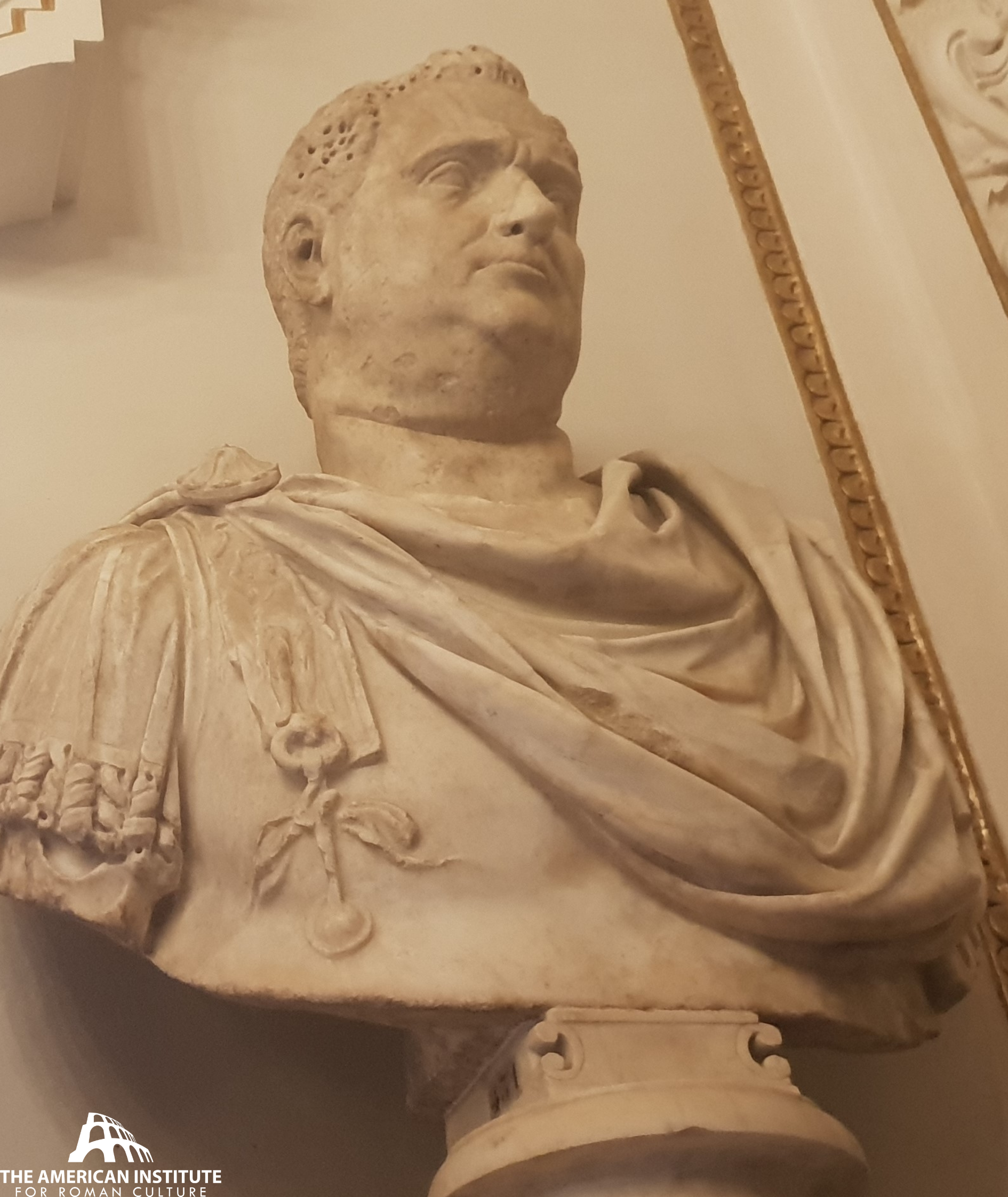
Masculine Bust once thought to be Vitellius, Musei Capitolini, Rome, November 2018.
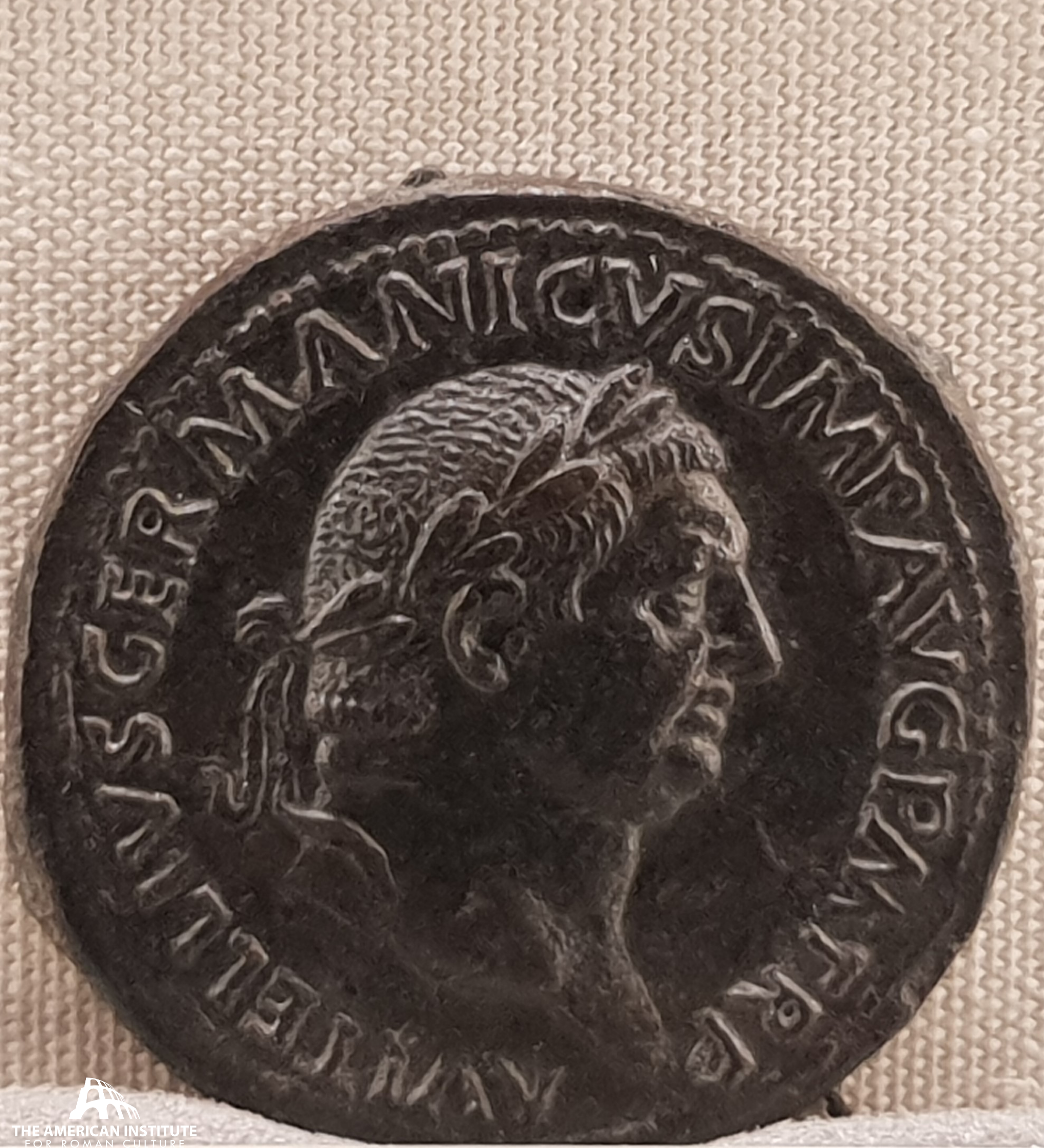
Sestertius of Vitellius, Palazzo Massimo, Rome, February 2019.
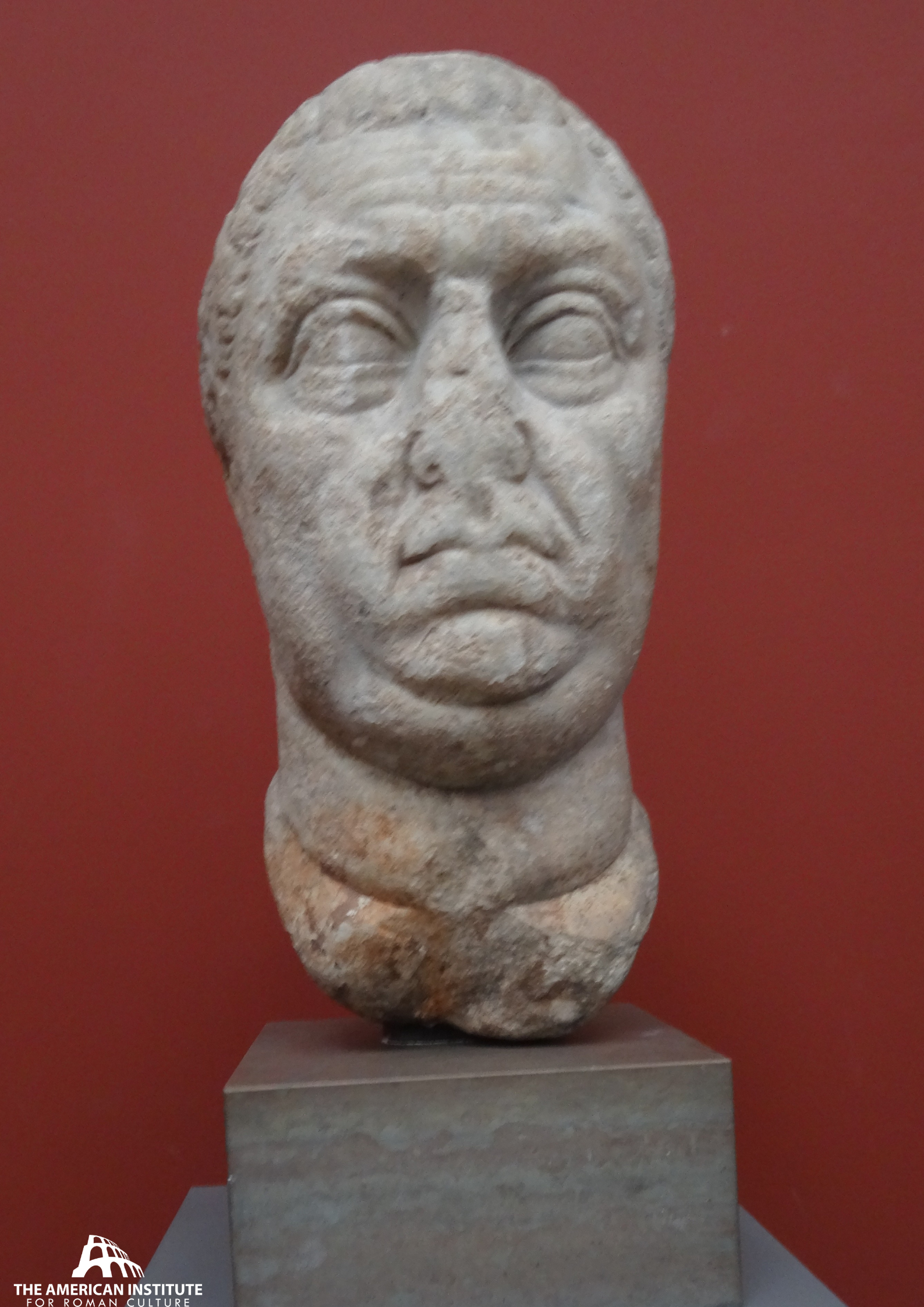
Portrait of Vitellius, NY Carlsberg Glyptotek, Copenhagen, October 2019.
Vitellius was born on September 24, 15 CE. He was the son of Lucius Vitellius, a three time consul, and his wife, Sextilia. His family was closely connected to the Julio-Claudian court, and Vitellius spent much of his youth on Capri with Emperor Tiberius. He later gained the favor of emperors Caligula, Claudius, and Nero. These powerful connections helped advance his political career, leading to his consulship in 48 CE and his appointment as proconsular governor of North Africa.
At the end of 68 CE, Emperor Galba appointed Vitellius commander of the legions in Lower Germania. Although he had little military experience, he quickly gained the loyalty of his troops through generosity and lenient discipline. On January 2, 69 CE, the legions refused to renew their oaths to Galba and instead proclaimed Vitellius emperor. The generals Fabius Valens and Aulus Caecina Alienus led the Germanic armies into Italy to confront Otho, who had already assassinated Galba and seized the throne.
The two sides clashed in northern Italy at the First Battle of Bedriacum in April 69 CE. Vitellius emerged victorious, and Otho committed suicide rather than continue the civil war. The Senate recognized Vitellius as emperor on April 19, 69 CE.
As emperor, Vitellius showed leniency toward Otho’s supporters, sponsored gladiatorial games, and allowed members of the equestrian class to serve in the imperial bureaucracy. However, his short reign became more famous for administrative negligence and indulgence. According to Suetonius, Vitellius devoted more attention to personal pleasures than to governing the empire, reportedly feasting as many as four times a day.
His rule faced a serious challenge in July 69 CE, when the eastern legions proclaimed Vespasian emperor. As Vespasian’s forces, led by Marcus Antonius Primus, marched toward Rome, support for Vitellius rapidly collapsed. After a devastating defeat at the Second Battle of Bedriacum, Vitellius attempted to abdicate, but his supporters in Rome prevented him from stepping down. The conflict reached its climax in December 69 CE, when Vespasian’s troops stormed the capital.
Vitellius was discovered hiding in a gatekeeper’s hut on December 20, 69 CE. He was dragged through the streets, tortured, and executed on the Gemonian Stairs. His body was desecrated and thrown into the Tiber. According to tradition, his final words were: “Yet I was once your emperor…”
Bibliography:
- Davenport, Caillan. “The Conduct of Vitellius in Cassius Dio’s Roman History.” Historia: Zeitschrift Für Alte Geschichte 63, no. 1 (2014): 96–116. http://www.jstor.org/stable/24433641.
- Greenhalgh, P. A. L. The Year of the Four Emperors. New York: Viking Press, 1975.
- Murison, Charles L. Galba, Otho and Vitellius: Careers and Controversies. Stuttgart: B. G. Teubner, 1993.
- Newbold, R. F. “Vitellius and the Roman Plebs.” Historia: Zeitschrift Für Alte Geschichte 21, no. 2 (1972): 308–19. http://www.jstor.org/stable/4435266.
- Wellesley, Kenneth. The Long Year A.D. 69. London: Routledge, 1989.
- Yavetz, Z. “Vitellius and the ‘Fickleness of the Mob.’” Historia: Zeitschrift Für Alte Geschichte 18, no. 5 (1969): 557–69. http://www.jstor.org/stable/4435104.
27
(Suetonius, Life of Vitellius, 3-4)
68
(Suetonius, Life of Vitellius, 7)
69
(Suetonius, Life of Vitellius, 13)
69
(Tacitus, Histories, 3.84-85)
This content is brought to you by The American Institute for Roman Culture, a 501(C)3 US Non-Profit Organization.
Please support our mission to aid learning and understanding of ancient Rome through free-to-access content by donating today.
Cite This Page
Cite this page as: Darius Arya, The American Institute for Roman Culture, “Vitellius,” Ancient Rome Live. Last modified 05/28/2026. https://ancientromelive.org/vitellius/
License
Created by The American Institute of Roman Culture, published on 06/28/2021 under the following license: Creative Commons: Attribution-NonCommercial-ShareAlike. This license lets others remix, tweak, and build upon this content non-commercially, as long as they credit the author and license their new creations under the identical terms. Please note that content linked from this page may have different licensing terms.