
Official Name: IMPERATOR MARCUS OTHO CAESAR AUGUSTUS
Birthdate: April 28, 32 CE
(Suetonius, Life of Otho, 2)
Birthplace: Ferentium, Italy
(Suetonius, Life of Otho, 1)
Reign: Otho was declared emperor by the praetorian guard on January 15, 69 CE. He was awarded imperial titles by the Senate on the same day, after the assassination of Galba.
(Suetonius, Life of Otho, 6-7)
Marriages: Poppaea Sabina
(Suetonius, Life of Otho, 3)
Otho: Otho committed suicide on April 16, 69 CE. He killed himself after losing the Battle of Bedriacum to Vitellius, a rival claimant to the throne.
(Suetonius, Life of Otho, 9-11) (Plutarch, Life of Otho, 17)
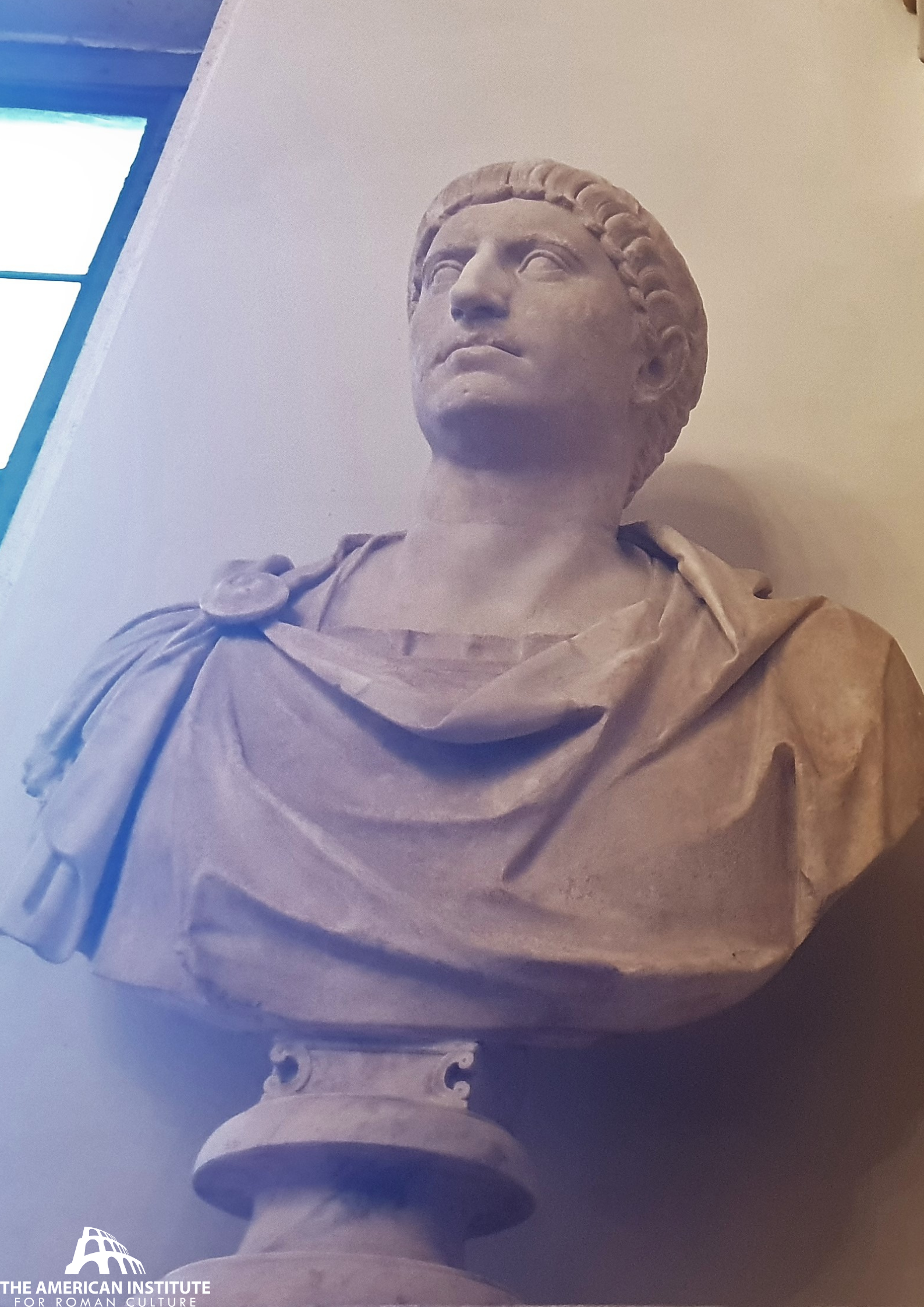
Bust originally identified as Otho, Musei Capitolini, Rome, December 2018.
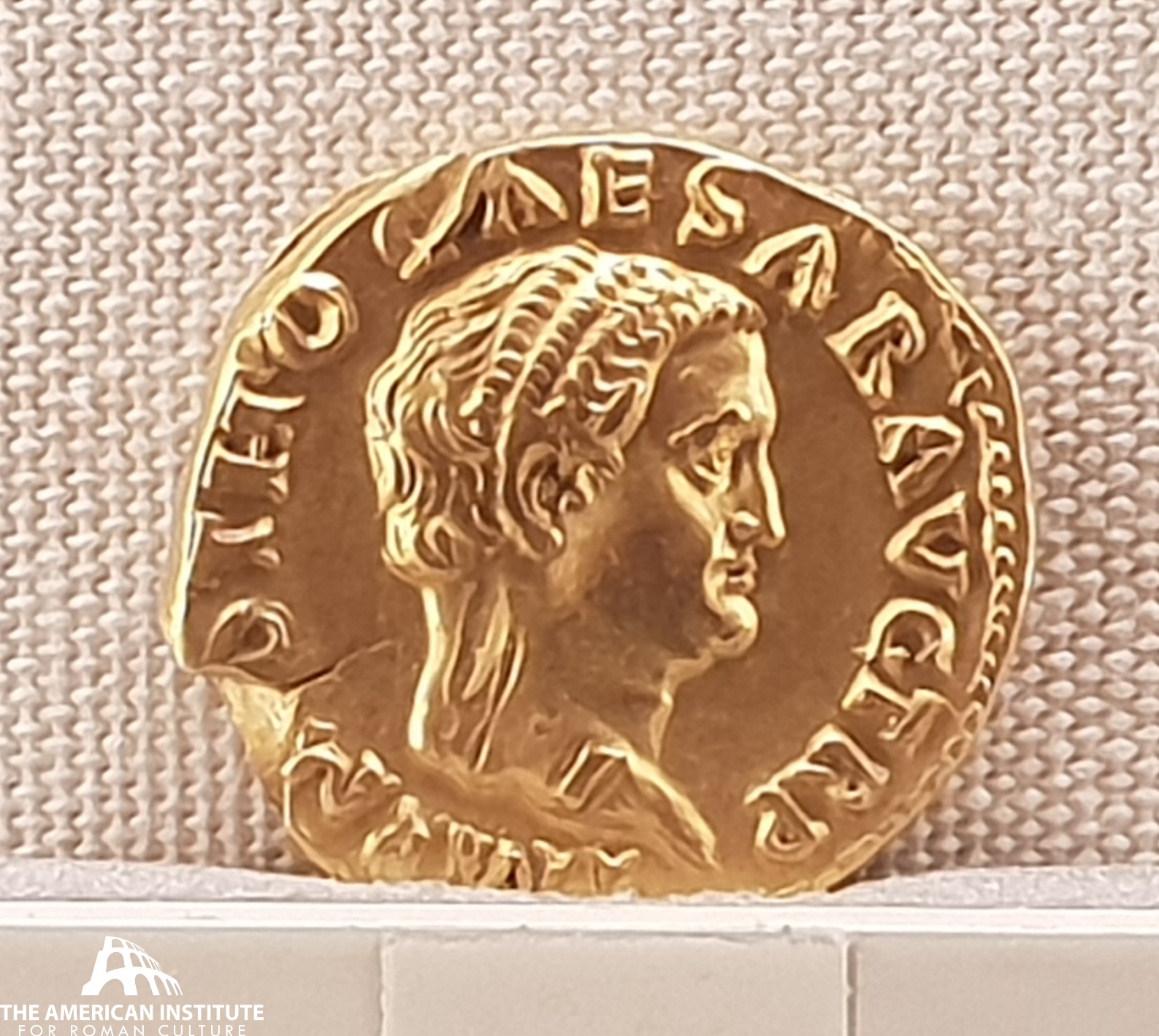
Aureus of Otho, Palazzo Massimo, Rome, February 2019.
Born in 32 CE in Ferentium, Italy, Marcus Salvius Otho came from a distinguished family during the early Julio-Claudian era. Unlike his successor Galba, who represented the traditional republican aristocracy, Otho’s early life was shaped by the lavish and often unstable court of Nero. He became part of Emperor Nero’s inner circle and was closely involved in court politics. His fortunes changed dramatically in 58 or 59 CE after he married Poppaea Sabina, who was at that time the mistress of Emperor Nero. Nero forced Otho to divorce Poppaea so that he could marry her himself. After the divorce, Nero effectively removed Otho from Rome by appointing him governor of Lusitania, modern-day Portugal and western Spain.
Otho spent about a decade in Lusitania, where he rebuilt his reputation from that of a reckless courtier into a capable administrator. Despite his exile, he remained politically ambitious. In 68 CE, he was the first provincial governor to support Galba’s revolt against Nero. He contributed both money and influence to the cause and traveled to Rome expecting to be named Galba’s heir. However, in early 69 CE those hopes were dashed when Galba chose Piso Licinianus instead, viewing Otho as politically risky because of his past ties to Nero.
In response, Otho launched a swift and decisive coup. Backed by discontented soldiers, he was proclaimed emperor and arranged the assassination of Galba and Piso in the Roman Forum. The Senate quickly confirmed his rule. His short reign attempted to balance respect for Nero’s legacy by restoring statues and recalling officials, while also promoting a more restrained and stable style of governance.
His reign was challenged almost immediately by the Rhine legions, who had declared their own commander Vitellius as emperor. Despite Otho’s efforts to negotiate, Vitellius’s forces advanced into Italy, leading to civil war. The conflict culminated in the First Battle of Bedriacum in April 69 CE, where Otho’s forces were defeated. Although he still had reserves and support from other legions, Otho chose to end the struggle rather than prolong the civil war.
On April 16, 69 CE, after only three months as emperor, Otho committed suicide at Brixillum in northern Italy. His death was widely seen as an act of sacrifice intended to spare Rome further bloodshed. While it did not end the conflict immediately, it contributed to his reputation as a ruler who ultimately placed the stability of the empire above his own power. The violence of the broader Year of the Four Emperors nevertheless continued after his death.
Bibliography:
- Greenhalgh, P. A. L. The Year of the Four Emperors. New York: Viking Press, 1975.
- Murison, Charles L. Galba, Otho and Vitellius: Careers and Controversies. Stuttgart: B. G. Teubner, 1993.
- Roche, Paul. “The Public Imagery of the Emperor Otho.” Historia: Zeitschrift Für Alte Geschichte 57, no. 1 (2008): 108–23. http://www.jstor.org/stable/25598420
- Shotter, D. C. A. “The Coinage of Otho: A Contribution to the History of His Reign.” Historia: Zeitschrift Für Alte Geschichte 45, no. 3 (1996): 382–85. http://www.jstor.org/stable/4436434
- Wellesley, Kenneth. The Long Year A.D. 69. London: Routledge, 1989.
59
(Suetonius, Life of Otho, 3)
69
(Suetonius, Life of Otho, 5)
69
(Suetonius, Life of Otho, 11) (Plutarch, Life of Otho, 17)
This content is brought to you by The American Institute for Roman Culture, a 501(C)3 US Non-Profit Organization.
Please support our mission to aid learning and understanding of ancient Rome through free-to-access content by donating today.
Cite This Page
Cite this page as: Arya, Bartlett, and Paz. The American Institute for Roman Culture, “Otho,” Ancient Rome Live. Last modified 04/25/2026. https://ancientromelive.org/otho/
License
Created by The American Institute of Roman Culture, published on 06/12/2021 under the following license: Creative Commons: Attribution-NonCommercial-ShareAlike. This license lets others remix, tweak, and build upon this content non-commercially, as long as they credit the author and license their new creations under the identical terms. Please note that content linked from this page may have different licensing terms.