
Official Name: SERVIUS GALBA CAESAR AUGUSTUS
Birthdate: December 24, 3 BCE
(Suetonius, Life of Galba, 4)
Birthplace: Tarracina, Italy
(Suetonius, Life of Galba, 4)
Reign: Galba declared himself Caesar and marched on Rome in 68 CE. He was named emperor by the senate on June 8, 68 CE.
(Suetonius, Life of Galba, 11) (Plutarch, Life of Galba, 2 & 7)
Marriages:
Aemilia Lepida (died before Galba became emperor)
(Suetonius, Life of Galba, 5)
Children:
Two (unnamed) sons by Aemilia Lepida.
(Suetonius, Life of Galba, 5)
Death:
Killed by members of the praetorian guard on January 15, 69 CE near the Lacus Curtius in the Roman Forum.
(Suetonius, Life of Galba, 20-21) (Plutarch, Life of Galba, 26-27)
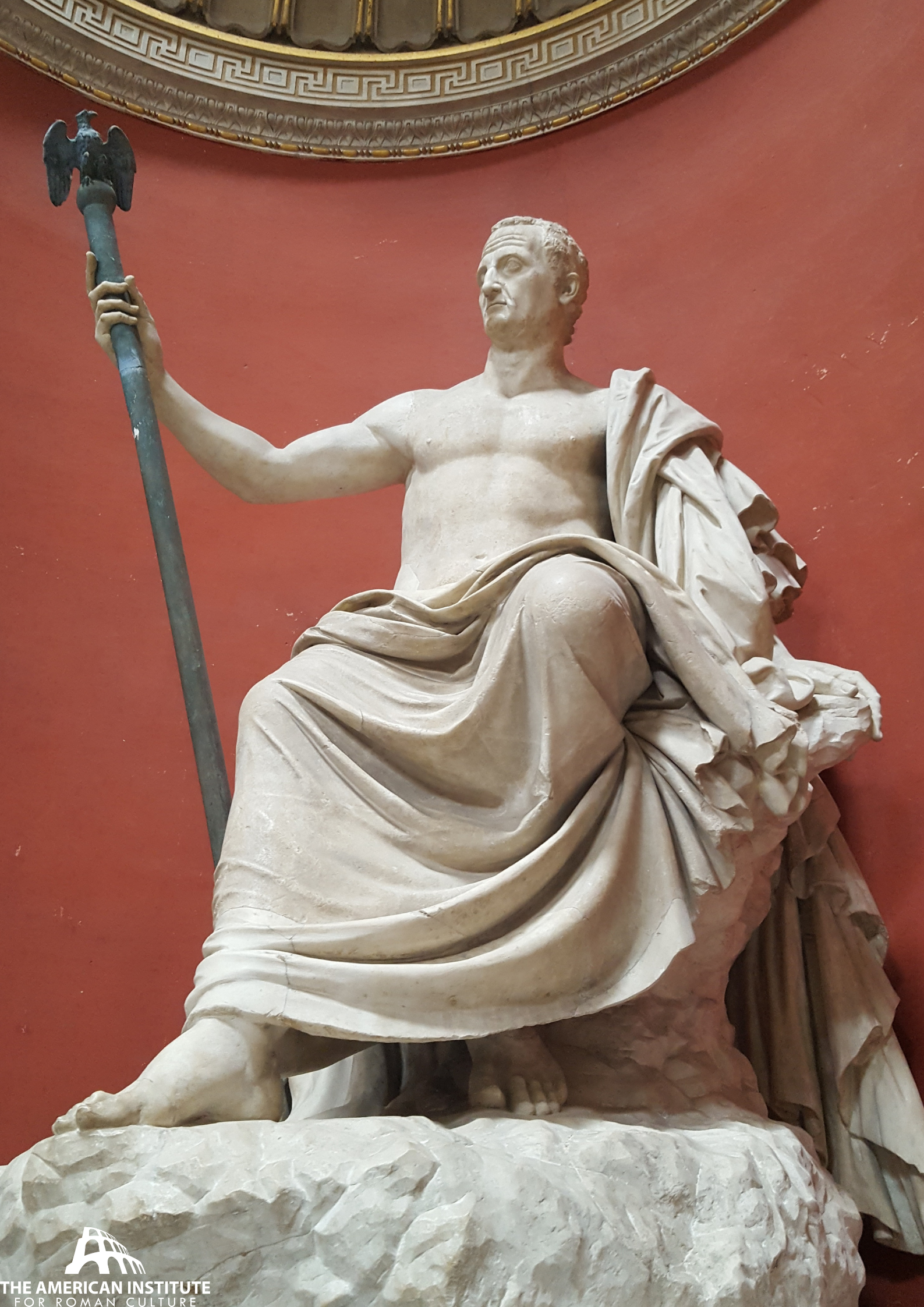
Statue of Galba, Musei Vaticani, Vatican City, April 2017.
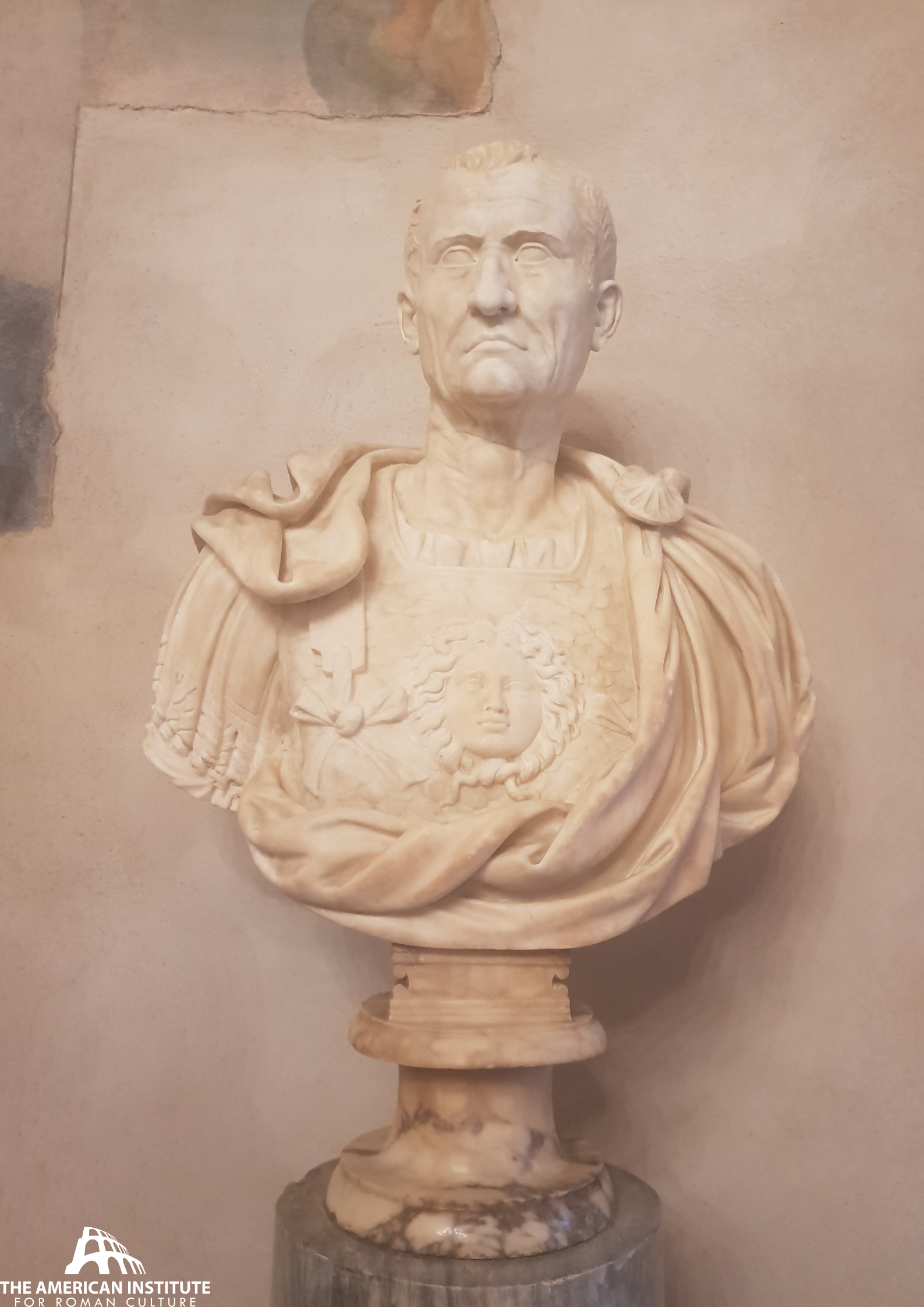
Bust restored as Galba, Musei Capitolini, Rome, September 2019.
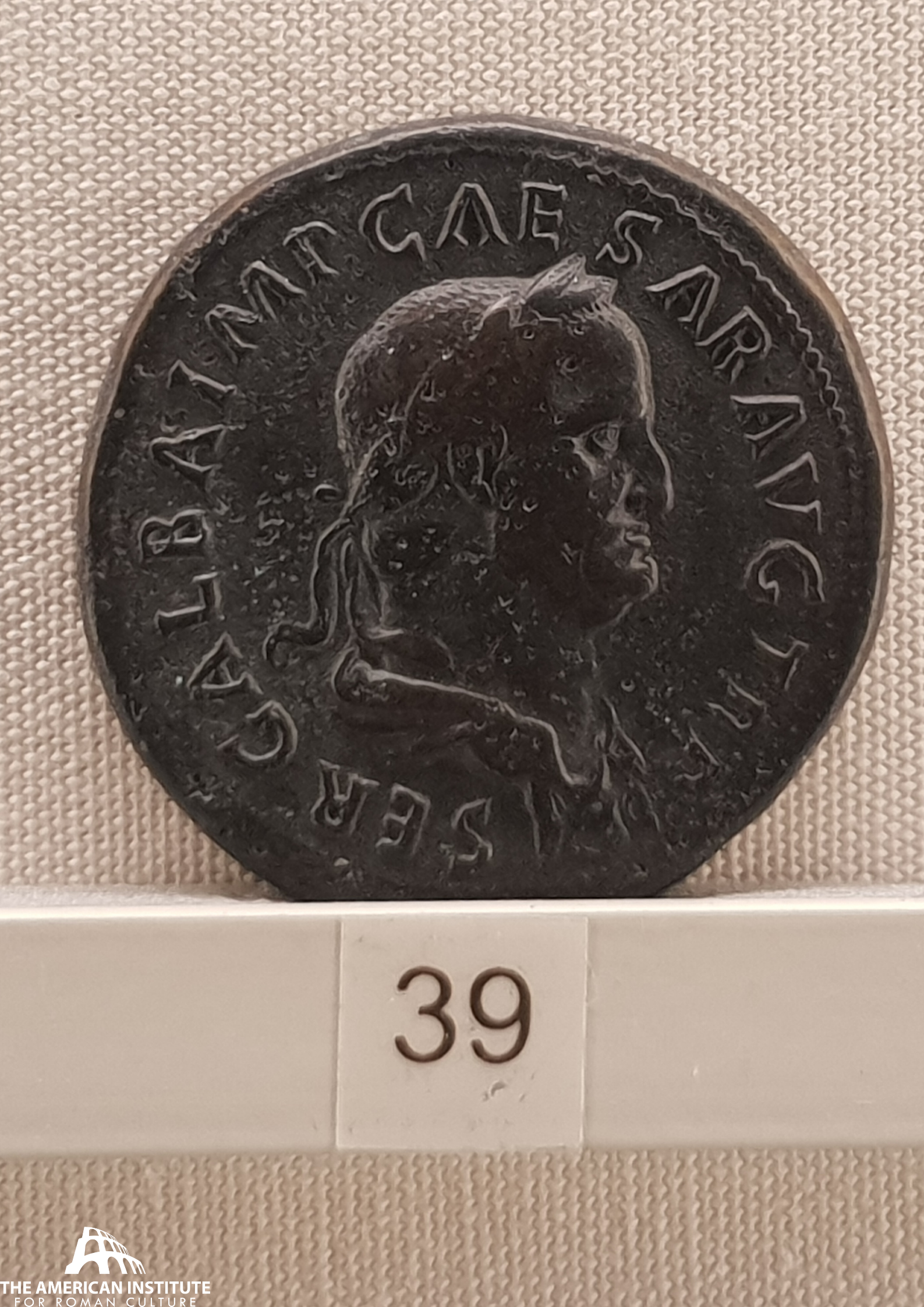
Sestertius of Galba, Palazzo Massimo, Rome, February 2019.
Born in 3 BCE in Tarracina, Italy, Galba came from a wealthy and well-established family. As a young man, he gained the favor of Livia Drusilla, the wife of Augustus and mother of Tiberius. With her support, Galba became connected to the Julio-Claudian dynasty and began a long and distinguished career in public life.
Galba advanced steadily through both political and military ranks. He served as governor of Aquitania and became consul in 33 CE, later going on to govern North Africa and Hispania Tarraconensis. In these roles, he earned a reputation for strict discipline and a strong commitment to traditional Roman values. He married Aemilia Lepida and had two children, but after their deaths he chose not to remarry, leaving him without an heir when he eventually rose to power.
By 68 CE, Emperor Nero faced growing unrest across the empire. Galba, then governor of Hispania, took advantage of the situation. In April, he renounced his loyalty to Nero and declared himself a representative of the Senate and People of Rome. After Nero’s suicide in June, Galba marched to Rome and was recognized by the Senate as emperor. His accession marked a turning point, as he became the first ruler in nearly a century not descended from the Julio-Claudian dynasty.
Galba’s reign lasted only seven months and was marked by harsh financial policies and political missteps. When he arrived in Rome in October 68 CE, he tried to restore the empire’s finances by reclaiming money and property given out by Nero. He also refused to pay promised bonuses to the Praetorian Guard, which made him deeply unpopular. His reliance on corrupt advisors such as Titus Vinnius and Cornelius Lacus further damaged his reputation.
In 69 CE, the legions stationed in Germania Superior rebelled, exposing the fragility of Galba’s rule. In an effort to reassert control and demonstrate his authority, he named Piso Licinianus, a respected aristocrat, as his successor. Instead of stabilizing the situation, this decision angered many in the military and deeply disappointed Marcus Salvius Otho, who had expected to be chosen as heir.
Otho responded quickly and decisively. Determined to seize power, he turned to the Praetorian Guard and promised them a generous reward in exchange for their support. On January 15, 69 CE, the Guard proclaimed Otho emperor and murdered Galba near the Lacus Curtius in the Roman Forum. That same evening, the Senate, with no real power to resist, formally granted Otho the imperial titles.
Galba’s assassination plunged Rome into chaos and marked the beginning of the civil war known as the Year of the Four Emperors. Although he had enjoyed a long and distinguished career, his brief seven-month reign as emperor proved ineffective. The historian Tacitus later captured this contradiction, writing that Galba seemed “equal to the imperial office, if he had never held it.”
Bibliography:
- Castillo, Arcadio del. “The Emperor Galba’s Assumption of Power: Some Chronological Considerations.” Historia: Zeitschrift Für Alte Geschichte 51, no. 4 (2002): 449–61. http://www.jstor.org/stable/4436669
- Murison, Charles. Galba, Otho and Vitellius: Careers and Controversies. Spudasmata 52. Hildesheim: Georg Olms Verlag, 1993.
- Syme, Ronald. “Partisans of Galba.” Historia: Zeitschrift Für Alte Geschichte 31, no. 4 (1982): 460–83. http://www.jstor.org/stable/4435823
20
(Suetonius, Life of Galba, 6)
33
(Plutarch, Life of Galba, 3) (Suetonius, Life of Galba, 6)
68
(Suetonius, Life of Galba, 1)
68
(Suetonius, Life of Galba, 16)
This content is brought to you by The American Institute for Roman Culture, a 501(C)3 US Non-Profit Organization.
Please support our mission to aid learning and understanding of ancient Rome through free-to-access content by donating today.
Cite This Page
Cite this page as: Arya, Bartlett, and Paz. The American Institute for Roman Culture, “Galba,” Ancient Rome Live. Last modified 04/26/2026. https://ancientromelive.org/galba/
License
Created by The American Institute of Roman Culture, published on 05/31/2021 under the following license: Creative Commons: Attribution-NonCommercial-ShareAlike. This license lets others remix, tweak, and build upon this content non-commercially, as long as they credit the author and license their new creations under the identical terms. Please note that content linked from this page may have different licensing terms.