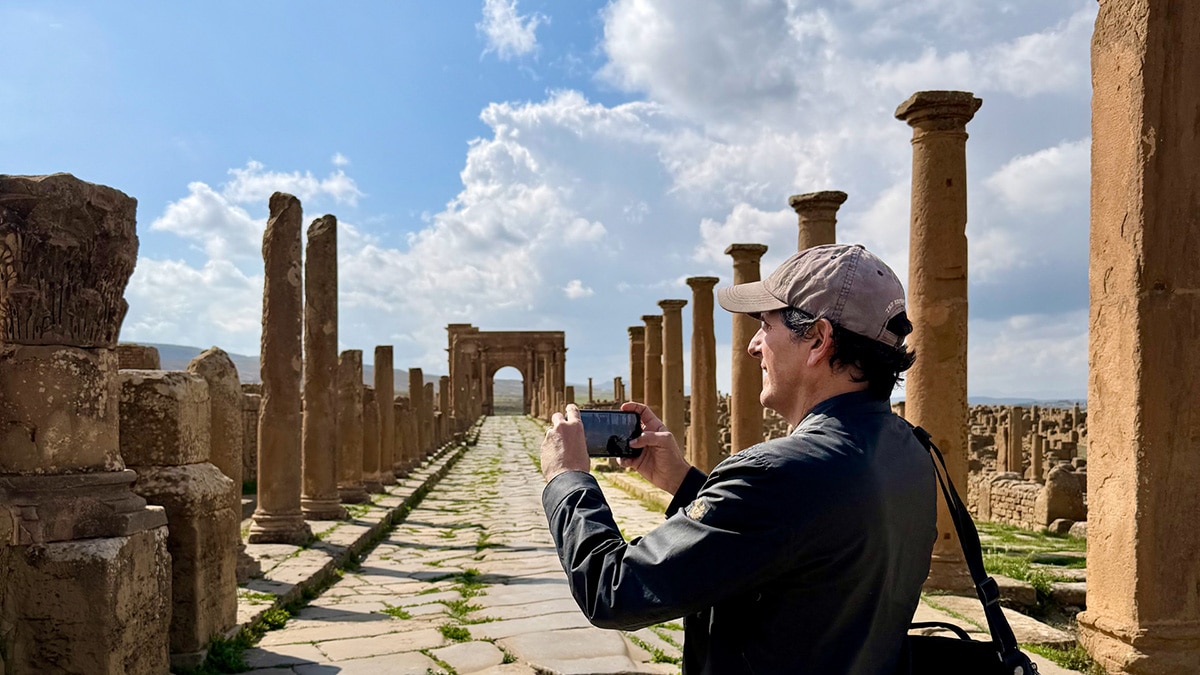

From Timgad to Tipaza, ARL Director Darius Arya travels to one of the Roman world’s most extraordinary – and least visited – landscapes.
When most people think of ancient Rome, they think of Italy. The Forum. The Colosseum. The roads that famously lead back to the Eternal City. But Rome was not Italy. It was a civilization that stretched from the Atlantic coast of Morocco to the deserts of Syria, and some of its most remarkable survivals are not in Europe at all.
Early this Spring, ARL Director Darius Arya traveled to Algeria to find out what the Roman world looks like when almost nobody is looking.

Rome’s Other World
North Africa was not Rome’s frontier, it was one of its most vital possessions. From the Atlantic coast to the Libyan desert, the Romans inherited a world already shaped by Phoenician traders, Punic cities, Numidian kingdoms, and indigenous Berber peoples, and built upon it with characteristic ambition. Carthage, once Rome’s greatest rival, was reborn as a Roman capital and became the agricultural engine that fed Italy. Across modern Algeria, planned cities rose from the landscape with forums, amphitheaters, baths, and aqueducts rivaling anything in Italy itself.
“This is a huge opportunity to expose our audience to the result of great wealth achieved in this region,” Arya says, “as part of the annona (the grain dole) that fed imperial Rome, allowing it to grow to a huge scale.”

Into Algeria
Over the course of the two-week trip, Arya visited some of the most significant Roman sites on the African continent. The journey began in Algiers. the modern Algerian capital built over the ancient Phoenician and later Roman city of Icosium, where traces of the ancient world still surface beneath the Ottoman and French colonial layers of one of North Africa’s great Mediterranean cities.
“Algiers was an extraordinary experience,” Arya says, “not just for its ancient history, but for its modern and contemporary story. This is an incredibly vibrant city and one that deserves to be far better known in the West.”
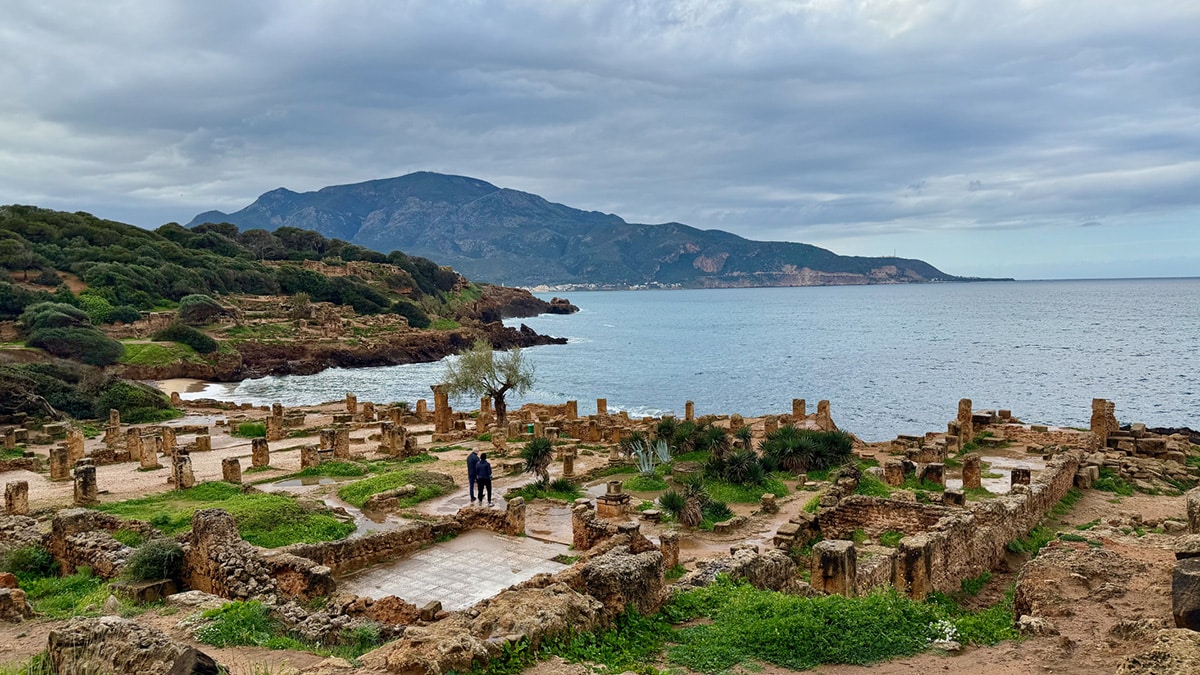
West to the coast and Tipaza, a Phoenician trading post absorbed into the Roman world and eventually elevated to a colony under Claudius. Its ruins spill dramatically across a headland above the Mediterranean: temples, a theater, an amphitheater, basilicas, and a necropolis, all set against the sea. Albert Camus, who grew up nearby, wrote “In the depth of winter, I finally learned that within me there lay an invincible summer.” It is easy to understand why.
He continued to Caesarea, modern Cherchell, once the capital of the client kingdom of Mauretania under the scholar-king Juba II and his wife Cleopatra Selene, daughter of Mark Antony and Cleopatra. Under Rome, it became the capital of the province of Mauretania Caesariensis and one of the most important cities on the North African coast. Its museum holds an exceptional collection of sculpture, mosaics, and artifacts that should be a world destination.

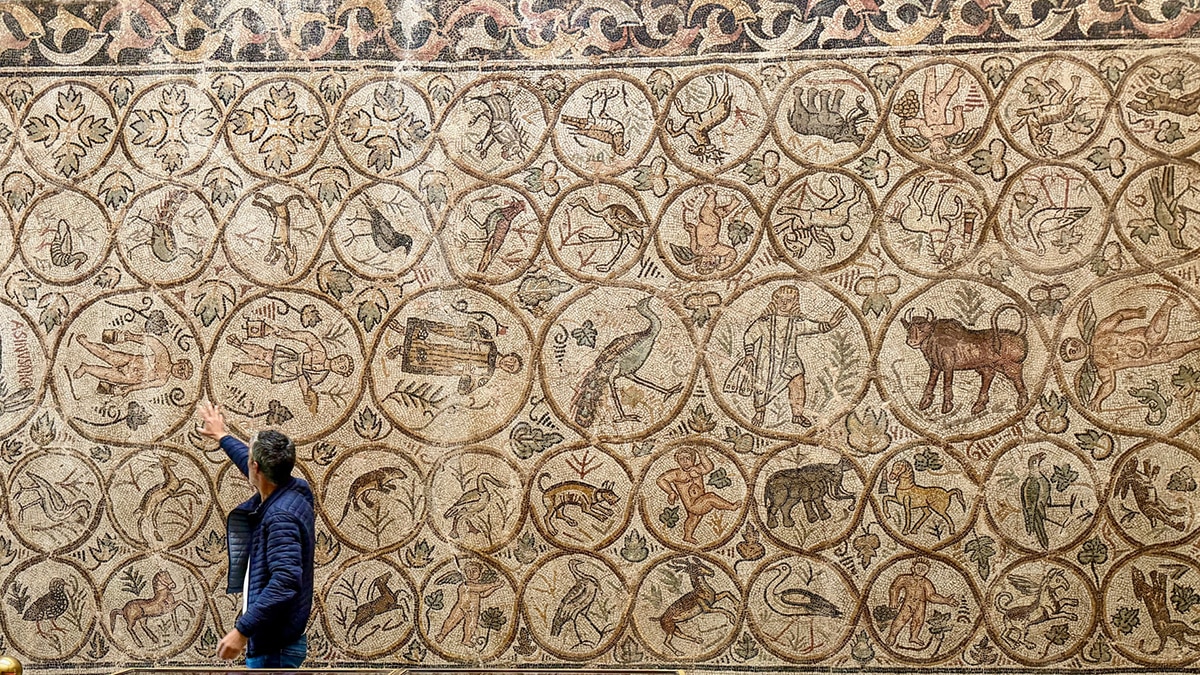
Next on the itinerary: Djemila, (ancient Cuicul), founded under Emperor Nerva. The city flourished through the 2nd and 3rd centuries AD and produced some of the finest surviving Roman mosaics anywhere in the Mediterranean world, many now housed in an exceptional on-site museum. Nestled in a valley, it felt left alone – an incredible city whose theater, forum, and Christian basilica survive in remarkable condition.
And inland to Constantine to explore the modern town and the ancient Cirta, one of the oldest continuously inhabited cities in the world, dramatically set on a rocky plateau surrounded by deep gorges. Capital of the Numidian kingdom before its absorption into the Roman world, the city was refounded by Emperor Constantine in 313 AD after its destruction in civil war and renamed in his honor. Its Roman bridges, spanning vertiginous drops above the Rhumel River gorge, remain among the most dramatic ancient engineering feats in North Africa.
The trip also included Hippo Regius, modern Annaba. the ancient Roman port city where St. Augustine served as bishop for over thirty years and died in 430 AD as the Vandals besieged the city. The site preserves a paved forum, theater, baths, mosaics, and the Basilica Pacis where Augustine preached. Just a few weeks later, Pope Leo XIV would make this visit — and become the first pope ever to visit Algeria.

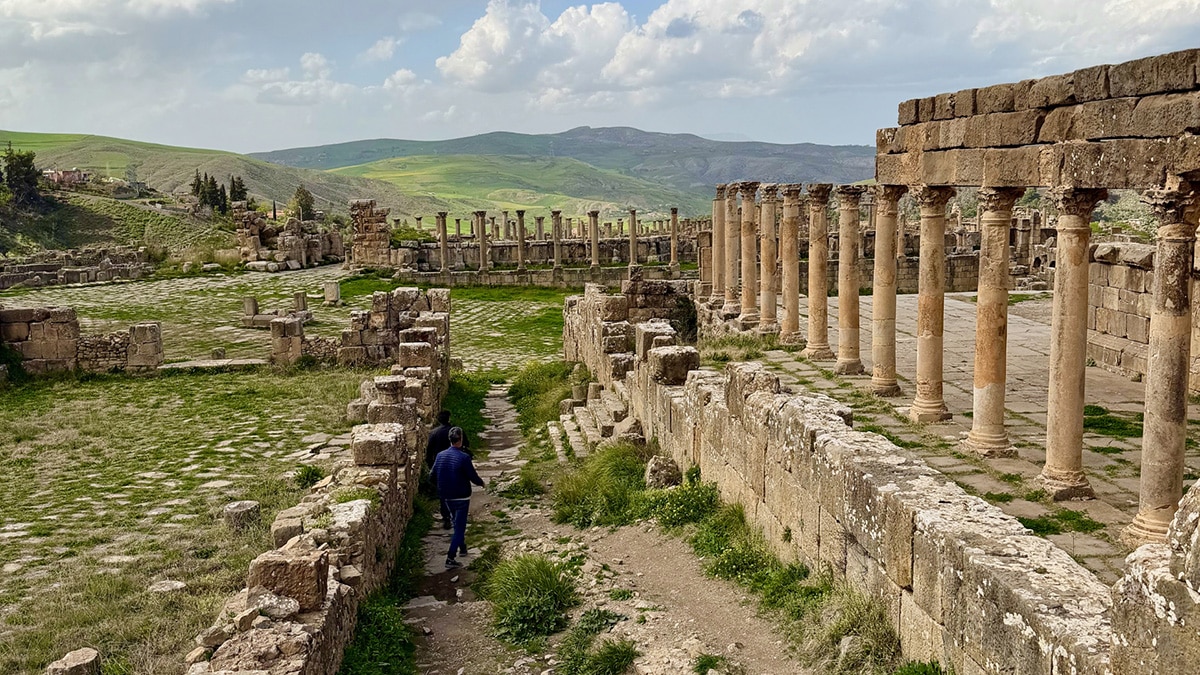
Finally to Timgad, often considered the Pompeii of North Africa. Founded by Emperor Trajan in 100 AD as a military colony for veterans of the Third Augustan Legion is one of the most spectacular sites. Laid out on a precise Roman grid, it is one of the best-preserved examples of urban planning from the ancient world: a forum, a theater, a library, triumphal arch, and a grid of streets so intact that aerial photographs look like a textbook diagram. Buried under sand for centuries, its preservation is extraordinary.
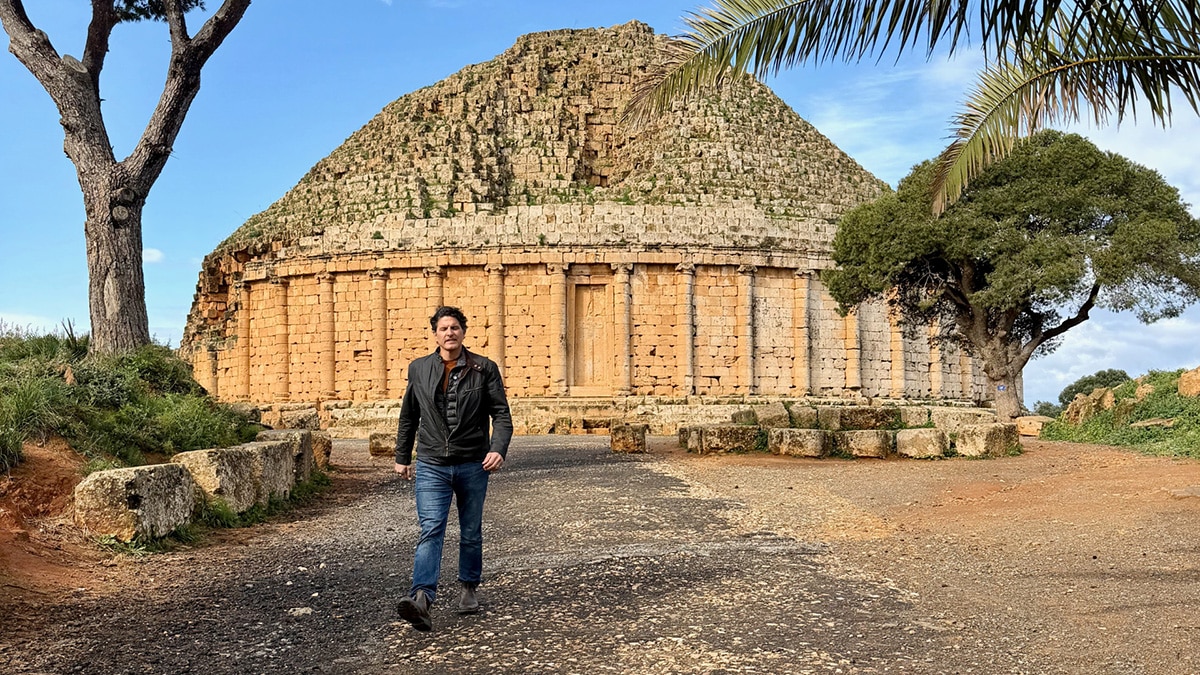
The trip also took in two remarkable royal tombs: the Tomb of Juba II and the Medracen, the ancient mausoleum of the Numidian kings, one of the oldest and largest funerary monuments in North Africa. as well as ancient bath complexes that rarely appear in any guidebook.
“Algeria is a vast country that is little explored by the modern tourist,” Arya says, “yet it contains some of the best examples of urban development preserved from the Roman world.”

To the Edge of the Desert
The itinerary continued and Arya traveled south, deep into the Aurès Mountains and through the dramatic gorge of El Kantara, where the landscape shifts abruptly from the green highlands of northern Algeria to the golden edge of the Sahara. The name says it: El Kantara means “the bridge” in Arabic, and the Roman bridge that gives the place its name still spans the gorge as it has for nearly two thousand years.
It is a modest structure by Roman standards, but its location makes it one of the most striking Roman monuments in North Africa. This was the gateway to the desert, the point where the road south from the Roman city of Lambaesis passed through the mountains and entered a different world entirely. Caravans, soldiers, merchants, and administrators all crossed here. The bridge didn’t just connect two banks of a river — it connected the Roman Mediterranean world to the trans-Saharan trade routes that brought gold, ivory, exotic animals, and enslaved people north toward the coast.
Standing at El Kantara, the scale of Roman ambition becomes newly legible. The empire didn’t stop at the comfortable edges of the Mediterranean. And it emphasises how Rome didn’t just build cities, it connect connected them across every landscape it encountered.

The Algeria trip is part of a broader ARL focus on Roman North Africa that has been building for months. Earlier this year, Arya hosted a masterclass on the Roman Army in North Africa — a recording that will be published on YouTube for free public access in the coming weeks. And on August 26, he delivered a guest lecture, “The Empire at the Edge of the Sahara,” for Smithsonian Associates, bringing Roman Algeria to one of America’s most prestigious public education platforms.
For ARL, the Algeria trip marks something of a turning point — a signal that the mission to bring the ancient Roman world to a global audience extends well beyond the streets of Rome. The empire was vast. So, increasingly, is ARL’s reach.