
Roman Emperor · 96–98 CE · Nerva-Antonine dynasty
Official nameImperator Nerva Caesar Augustus
Born Marcus Cocceius Nerva
BornNovember 8, 30 CE, Narni, Italy
(Cassius Dio, Roman History, 68.4; Epitome de Caesaribus, 12)
ReignSeptember 18, 96 – January 27, 98 CE
(Cassius Dio, Roman History, 68.1; Fasti Ostienses)
Predecessor / SuccessorDomitian / Trajan
Adopted son and heirTrajan (adopted October 97 CE)
(Cassius Dio, Roman History, 68.3)
DeathJanuary 27, 98 CE, Rome, of natural causes
(Cassius Dio, Roman History, 68.4; Epitome de Caesaribus, 12)
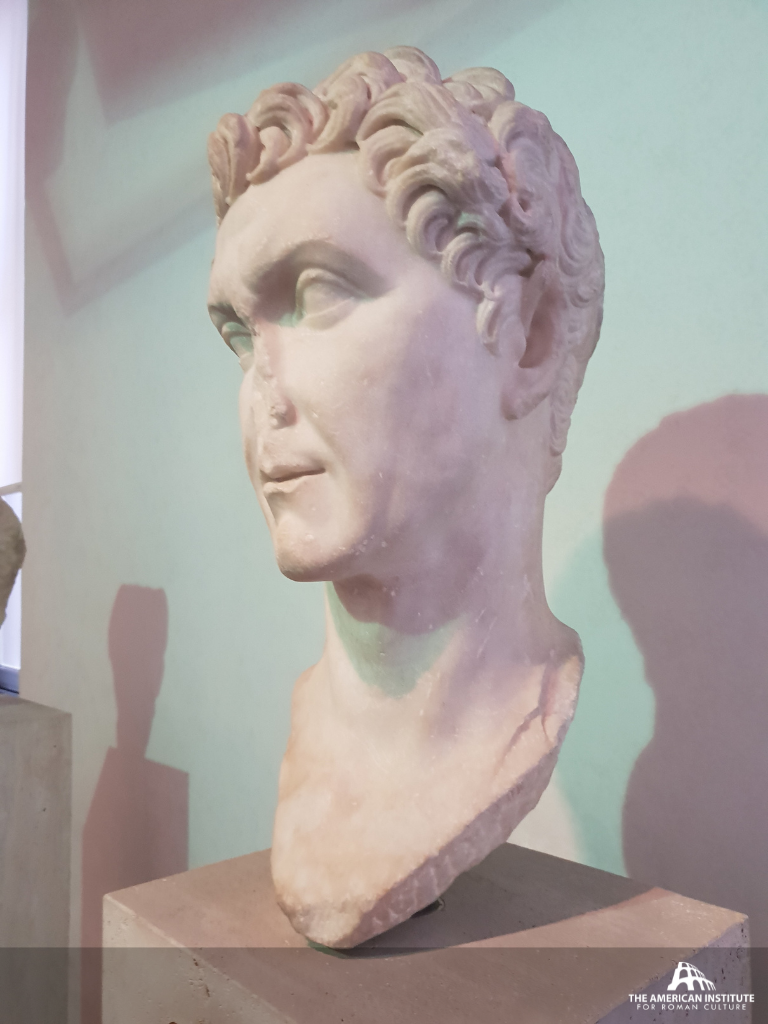
Portrait of Nerva, Palazzo Massimo alle Terme, Rome
Marcus Cocceius Nerva was born on November 8, 30 CE in Narni, Italy. He came from a distinguished senatorial family with connections to both the imperial court and the Julio-Claudian dynasty. His great-grandfather had served as consul in 36 BCE, while his grandfather was a distinguished jurist and a friend of Emperor Tiberius. Through his mother’s family, Nerva was also distantly related to the Julio-Claudian emperors. Although he did not follow a conventional military career, Nerva became an accomplished courtier, politician, and poet.
Nerva’s political career flourished under Nero. In 65 CE, he served as praetor and played a role in uncovering the Pisonian conspiracy against the emperor. For this, Nero showered him with prestigious rewards, including triumphal honors normally associated with military victories. After Nero’s death in 68 CE, Nerva successfully navigated the political upheavals that followed and maintained good relations with the Flavian emperors. Vespasian appointed him consul alongside himself in 71 CE, and Nerva later served as ordinary consul under Domitian in 90 CE. His ability to survive and prosper under successive emperors reflected his considerable political experience and connections.
The assassination of Domitian on September 18, 96 CE, brought Nerva unexpectedly to the imperial throne. The Senate proclaimed him emperor that same day. At sixty-six years old and without children of his own, Nerva offered a sharp contrast to Domitian and appeared to many senators as a safe choice for restoring stability after a turbulent reign. He quickly introduced measures intended to distance his government from Domitian’s rule. He recalled exiles, restored confiscated property, released prisoners, and prohibited future prosecutions for treason. He also presented himself as a moderate ruler who would govern in cooperation with the Senate.
Nerva sought to win popular support through generous gifts and social reforms. He distributed land worth 60 million sesterces to some of Rome’s poorest citizens and exempted parents and their children from the five percent inheritance tax. He may also have initiated the alimenta, a system of financial support for children in Italy that was later expanded under Trajan. This imperial largess, however, strained the treasury. In early 97 CE, Nerva appointed a commission of senior senators to recommend cuts in public spending. The commission reduced costly games and sacrifices, while Nerva rejected extravagant honors, including the erection of gold and silver statues in his likeness.
Nerva’s greatest weakness was his relationship with the army. In October 97 CE, the Praetorian Guard seized Nerva and forced him to surrender several of Domitian’s assassins. The humiliation exposed the limits of his authority and made clear that he needed a powerful military successor. Soon afterward, Nerva adopted Trajan, the respected governor of Upper Germany, as his son and heir. The decision strengthened Nerva’s position and provided the empire with a successor who had strong support among the armies.
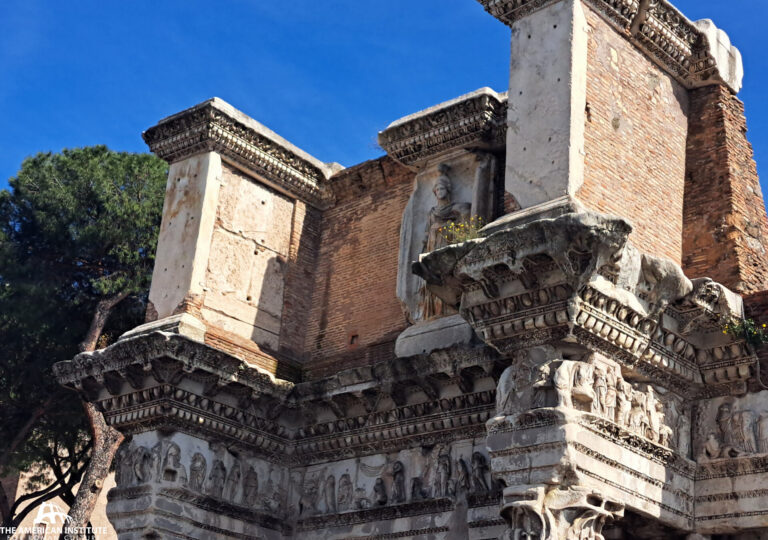
Nerva’s short reign also left its mark on Rome. He completed and dedicated the Forum Transitorium, begun under Domitian and later known as the Forum of Nerva, in 97 CE. He also built granaries, repaired the Colosseum after flooding, and continued infrastructure projects begun by the Flavians.
Nerva died of natural causes in Rome on January 27, 98 CE, only a few months after adopting Trajan. His ashes were placed in the Mausoleum of Augustus, and the Senate deified him as Divus Nerva. Although his reign lasted only sixteen months, Nerva helped stabilize the empire after Domitian’s assassination and established the succession that brought Trajan to power. His reign marked a crucial transition between the Flavian dynasty and the period traditionally associated with Rome’s “Five Good Emperors.”
Bibliography
- Campbell, Brian. “Nerva, Marcus Cocceius, Roman Emperor, 96–98 CE.” Oxford Classical Dictionary. Oxford University Press, 2016.
- Duncan-Jones, Richard. “The Purpose and Organisation of the Alimenta.” Papers of the British School at Rome 32 (1964): 123–46. http://www.jstor.org/stable/40310645
- Elkins, Nathan T. The Image of Political Power in the Reign of Nerva, AD 96–98. Oxford University Press, 2017.
- Grainger, John D. Nerva and the Roman Succession Crisis of AD 96–99. Routledge, 2003.
30 CE
Born on November 8 at Narni, Italy.
(Cassius Dio, Roman History, 68.4)
65 CE
Helps uncover the Pisonian conspiracy against Nero and receives triumphal honors.
(Tacitus, Annals, 15.72)
71 CE
Serves as consul alongside Emperor Vespasian.
96 CE
Proclaimed emperor by the Senate on the day Domitian is assassinated.
(Cassius Dio, Roman History, 67.15, 68.1)
97 CE
Seized by the Praetorian Guard; adopts Trajan as his son and heir.
(Cassius Dio, Roman History, 68.3)
98 CE
Dies in Rome on January 27 and is deified as Divus Nerva.
(Cassius Dio, Roman History, 68.4)
This content is brought to you by The American Institute for Roman Culture, a 501(C)3 US Non-Profit Organization.
Please support our mission to aid learning and understanding of ancient Rome through free-to-access content by donating today.
Join our free newsletter to receive more ancient Rome content, lecture and Masterclass invites, travel course news and more:
Cite this page as: Ancient Rome Live, The American Institute for Roman Culture, “Nerva“. Last modified
November 16, 2026. https://ancientromelive.org/nerva/
Created by The American Institute of Roman Culture, published on
July 20, 2022 under the following license: Creative Commons: Attribution-NonCommercial-ShareAlike. This license lets others remix, tweak, and build upon this content non-commercially, as long as they credit the author and license their new creations under the identical terms. Please note that content linked from this page may have different licensing terms.