
Official Name: LIVIA DRUSILLA
Birthdate: January 30, 59 or 58 BCE.
(Cassius Dio, Roman History, 58.2)
Birthplace: Unknown.
Reign: Livia married Octavian, who later became the emperor Augustus, in 38 BCE. After his death in 14 CE, she was given the honorary title “augusta” and inherited one-third of his estate.
(Tacitus, Annals, 5.1) (Suetonius, Life of Augustus, 101)
Marriages:
Tiberius Claudius Nero (43 BCE – 38 BCE)
(Tacitus, Annals, 5.1)
Augustus (38 BCE – 14 CE)
(Tacitus, Annals, 5.1) (Cassius Dio, Roman History, 48.44)
Children:
Tiberius (son by Tiberius Claudius Nero)
(Velleius Paterculus, Roman History, 2.75)
Drusus the Elder (son by Tiberius Claudius Nero)
(Cassius Dio, Roman History, 48.44) (Suetonius, Life of Claudius, 1)
Death: Livia died of natural causes on September 28, 29 CE. She was 86 years old.
(Cassius Dio, Roman History, 58.2) (Suetonius, Life of Tiberius, 51)
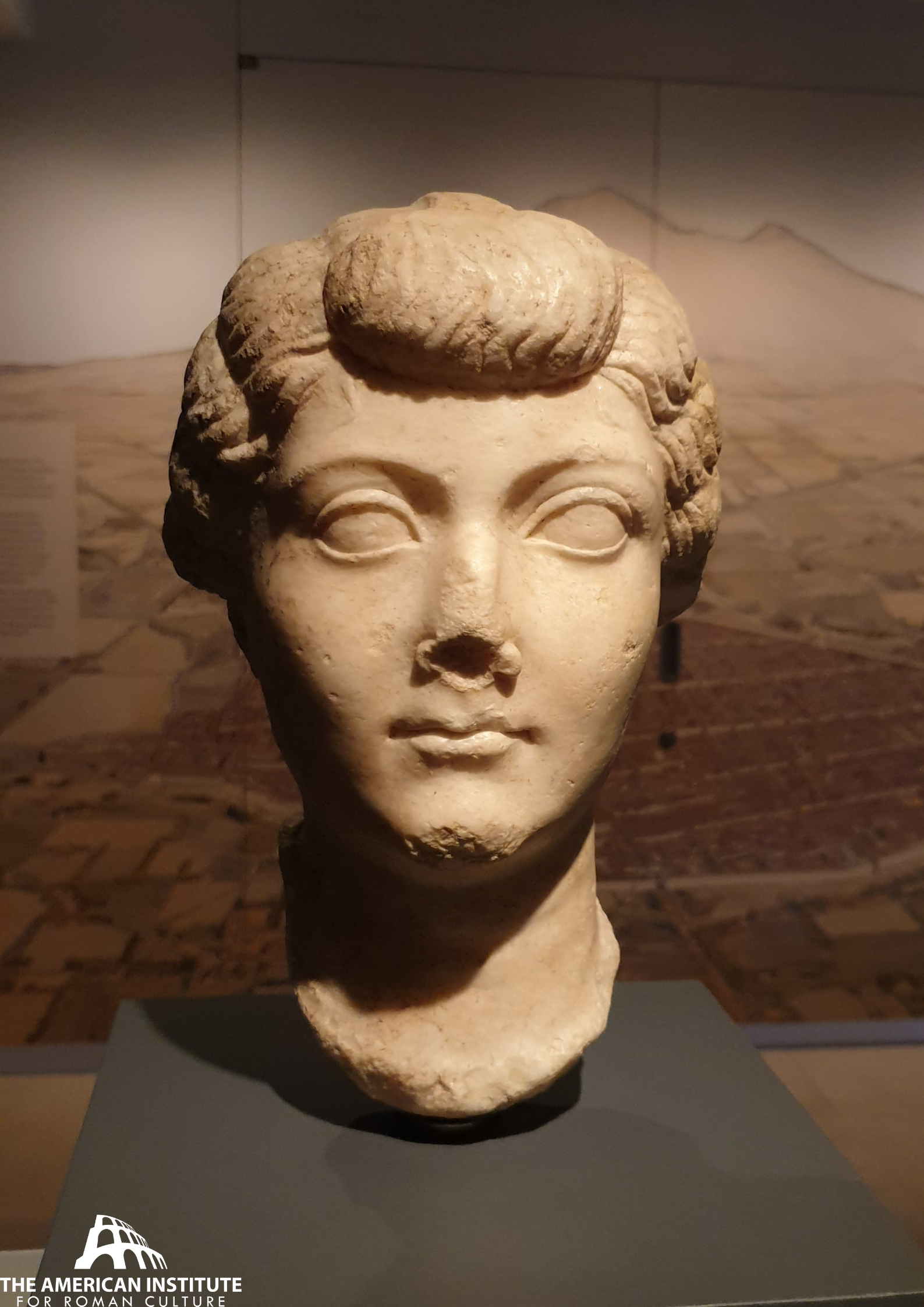
Head of Livia in the Ashmolean Museum, Oxford, January 2020
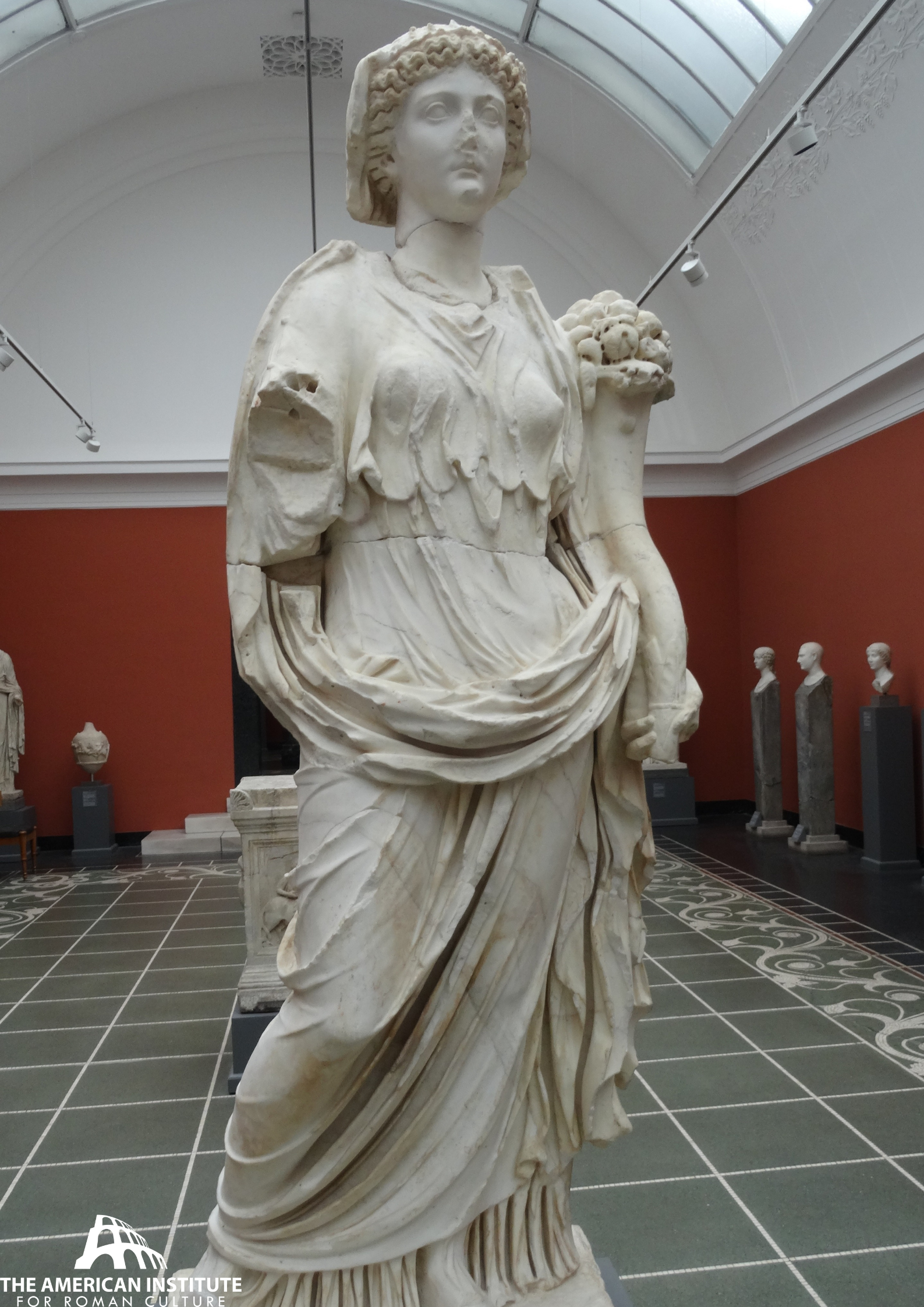
Statue of Livia as Ceres, Copenhagen Glyptotek, Copenhagen, September 18th 2019
Livia Drusilla was born in 59 or 58 BCE into the prominent Claudian family. Her father, Marcus Livius Drusus Claudianus, and her mother, Alfidia, belonged to Rome’s aristocratic elite, a background that placed her close to the center of political life from birth.
Her early years were shaped by the civil wars that marked the end of the Roman Republic. During the Perusine War (41–40 BCE), Livia fled Italy with her first husband, Tiberius Claudius Nero, and their infant son, the future emperor Tiberius. The couple had supported Mark Antony against Octavian in the struggle for control of Rome. In a twist of political fate, Livia later encountered Octavian himself. According to ancient sources, he was captivated by her and divorced his wife, Scribonia, shortly after the birth of their daughter Julia in 39 BCE. Livia, then pregnant with her second son, Drusus, married Octavian on 17 January 38 BCE. Their marriage lasted more than five decades and became one of the most influential partnerships in Roman history.
Unlike many elite Roman women, Livia cultivated a public image of traditional modesty and domestic virtue, a careful stance in a society that remained wary of monarchical power. At the same time, her influence was unusually significant. In 35 BCE, she was granted privileges such as sacrosanct status and financial independence. Ancient writers and later traditions often portray her as Augustus’ closest confidante, though the extent of her direct political involvement remains debated.
Over time, Livia’s position at court became the subject of both admiration and suspicion. The deaths of several potential heirs to Augustus, including Marcellus, Gaius Caesar, and Lucius Caesar, gave rise in later sources to rumors that she had played a role in clearing the path for her son Tiberius. These claims remain unproven and are treated cautiously by modern historians.
When Augustus died in 14 CE, ancient accounts record that he spoke warmly to Livia in his final moments. In his will, he formally adopted her into the Julian family, granting her the honorific name Julia Augusta. She continued to exercise significant influence during the reign of her son Tiberius, maintaining a prominent position in Roman political and public life.
Livia died in 29 CE at the age of eighty-six. She was later deified by the emperor Claudius and worshipped as Diva Augusta, securing her place as one of the most powerful and enduring women in Roman history.
Bibliography:
- Barrett, Anthony A. Livia: First Lady of Imperial Rome. New Haven: Yale University Press, 2002.
-
Barrett, Anthony A. “The Year of Livia’s Birth.” The Classical Quarterly 49, no. 2 (1999): 630–32. http://www.jstor.org/stable/639891.
- Huntsman, Eric D. “Livia before Octavian.” Ancient Society 39 (2009): 121–69. http://www.jstor.org/stable/44079922.
- Purcell, Nicholas. “Livia and the Womanhood of Rome.” Proceedings of the Cambridge Philological Society, no. 32 (212) (1986): 78–105. https://www.jstor.org/stable/44696918.
- Treggiari, Susan. Livia: The Empress of Rome. London: Routledge, 2019
38
(Tacitus, Annals, 1.3) (Cassius Dio, Roman History, 58.2)
14
(Tacitus Annals 1.5-6) (Cassius Dio, Roman History, 53.33 & 56.30)
42
(Suetonius, Life of Claudius, 11)
This content is brought to you by The American Institute for Roman Culture, a 501(C)3 US Non-Profit Organization.
Please support our mission to aid learning and understanding of ancient Rome through free-to-access content by donating today.
Cite This Page
Cite this page as: Darius Arya, The American Institute for Roman Culture, “Livia,” Ancient Rome Live. Last modified 06/20/2026. https://ancientromelive.org/livia/
License
Created by The American Institute of Roman Culture, published on 08/13/2021 under the following license: Creative Commons: Attribution-NonCommercial-ShareAlike. This license lets others remix, tweak, and build upon this content non-commercially, as long as they credit the author and license their new creations under the identical terms. Please note that content linked from this page may have different licensing terms.